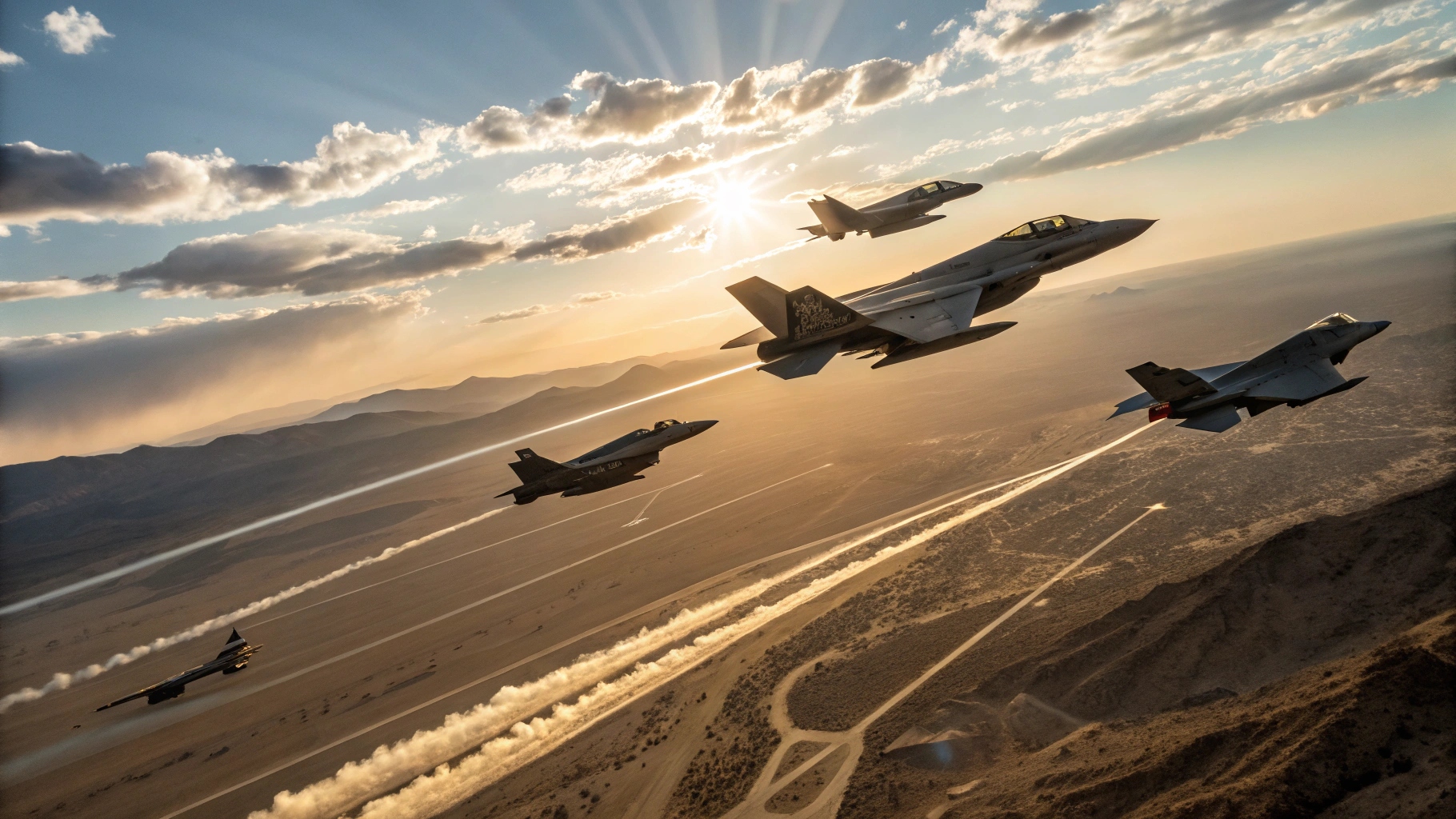

India’s fifth-generation Advanced Medium Combat Aircraft programme has moved into a decisive procurement phase after three private-sector groups submitted bids for the ₹15,000-crore prototype development project. Managed by the Aeronautical Development Agency, the competition will determine the Development-cum-Production Partner responsible for manufacturing five AMCA prototypes and one structural test specimen using ADA-developed designs. The bidders are an L&T-led consortium with Bharat Electronics Limited and Dynamatic Technologies, Tata Advanced Systems Limited submitting an independent proposal, and a Bharat Forge-led group partnered with BEML and Data Patterns. The Ministry of Defence will now examine the proposals through a high-level committee. Initial checks will focus on bid compliance and supporting documents, followed by a comprehensive technical evaluation expected to run until year-end. Price discussions will follow the technical assessment. The selected industrial partner will support the development of a domestically designed fighter incorporating low-observable features, internal weapons carriage, supercruise, sophisticated sensor fusion, and AI-enabled avionics. It will also be responsible for establishing a production ecosystem near Puttaparthi, Andhra Pradesh, close to the planned AMCA core integration and flight-test facility. The site is intended to become the centre for prototype integration, testing, and future flight-development work. The submission deadline, initially set for 27 August, was moved to 30 October after bidders requested additional time to complete the requirements of the complex aircraft programme. This marks the first time private Indian companies are competing to take a leading role in developing and manufacturing a domestic fighter prototype. Among the bidders, TASL has experience in aircraft manufacturing through its Airbus partnership for the C295 transport aircraft programme. Although the other contenders have experience supplying the aerospace sector, they have not previously assembled a complete aircraft. The three finalists were selected from seven original participants after a technical screening conducted by the Ministry of Defence. The winner will work alongside ADA to translate the existing AMCA design into prototypes capable of undergoing extensive development and certification trials. The competition signals a shift from India’s traditional fighter production model, in which HAL has played the dominant role. Greater private-sector participation is expected to broaden the country’s advanced aerospace industrial capabilities. The AMCA is planned as a major future combat platform for the Indian Air Force, supporting an indigenous fifth-generation fighter capability and strengthening domestic aerospace manufacturing. Successful prototype development will be an essential step toward subsequent production and operational induction during the next decade.