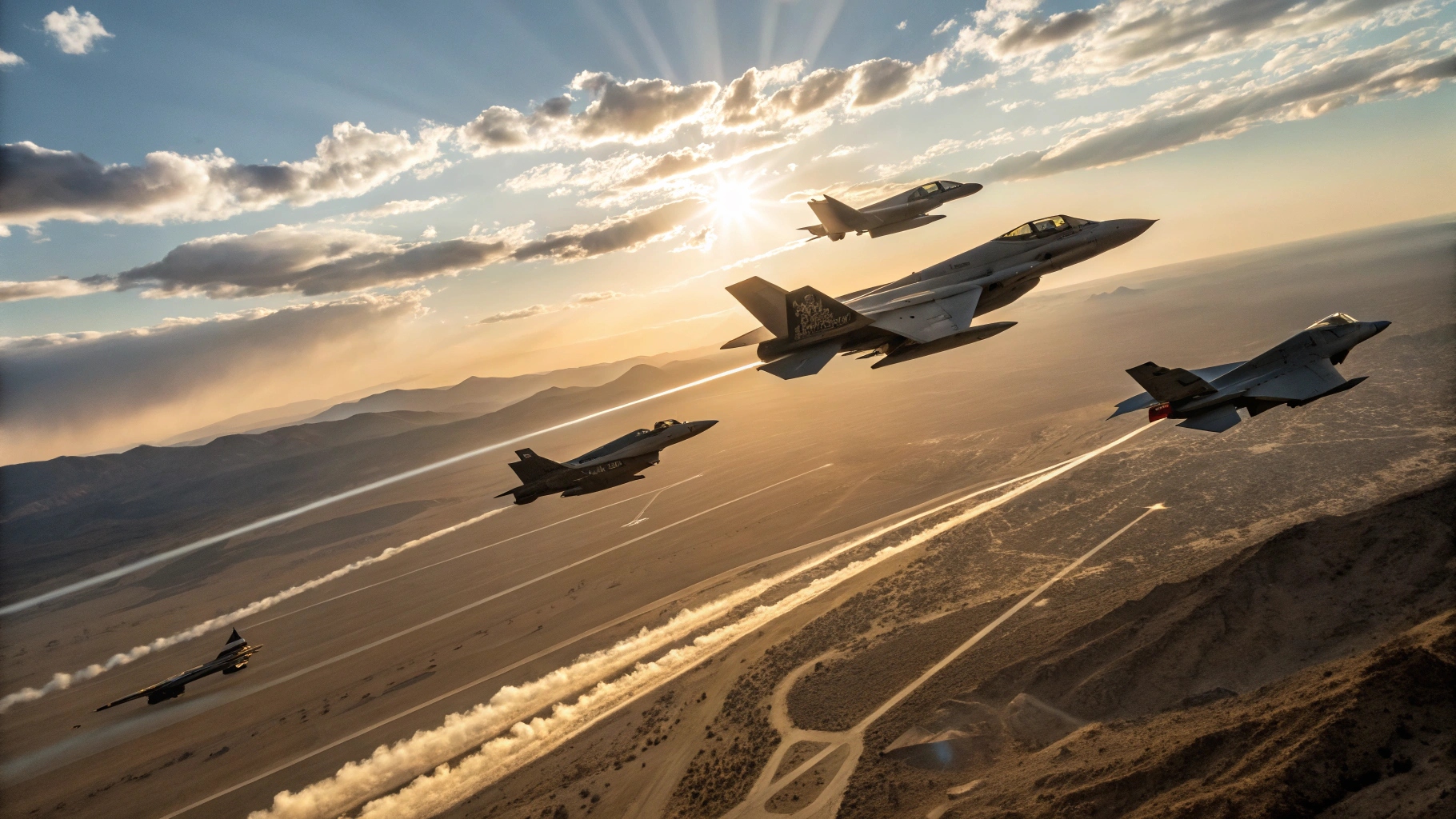

Japan is reportedly planning to send Mitsubishi F-2 fighters to India for a bilateral air exercise. If the deployment takes place, it would deepen an already growing defence relationship between New Delhi and Tokyo. The report comes ahead of Japanese Defence Minister Shinjiro Koizumi’s planned visit to India and Australia beginning August 17.
Chinese state media has interpreted the proposed exercise as part of Japan’s effort to respond to China’s growing influence and improve military coordination with India. However, the two countries have been developing defence ties for years, including increasingly complex military exercises.
The reported deployment has an important distinction. It would be the first time Japanese F-2 aircraft operate from Indian territory during a bilateral fighter exercise, although F-2s have already taken part in an India-Japan fighter exercise. In Veer Guardian 2023, four Japanese F-2s and four F-15s operated from Hyakuri Air Base and trained with four Indian Su-30MKIs.
The proposed exercise would therefore reverse the earlier direction of training. Rather than Indian fighters travelling to Japan, Japanese aircraft would operate from an Indian base. This could give Japanese crews useful experience with Indian airspace procedures, local operating conditions, logistics and climate.
The F-2 is particularly relevant because it is based on the F-16 design but incorporates substantial Japanese modifications. The aircraft features a larger wing, Japanese avionics and an indigenous AESA radar, giving it a different configuration from standard F-16 variants.
Indian pilots could also benefit from the opportunity to train against a different fighter type. India’s fleet includes Russian-origin Su-30MKIs, French Rafales and Mirage 2000s, indigenous Tejas aircraft and other platforms. Dissimilar training can expose pilots to different sensors, electronic-warfare characteristics, flight-control systems and tactical approaches.
The activity would also support the wider expansion of India-Japan security cooperation. The two countries conduct military exercises across several domains and both participate in the Quad alongside the United States and Australia.
China’s reaction is understandable given the broader Indo-Pacific security environment, and Chinese commentary has described the exercise as part of Tokyo’s effort to counter Beijing. From India’s perspective, however, the exercise does not have to be defined solely by China. It can strengthen operational cooperation and provide valuable training with another advanced air force while allowing India to retain strategic autonomy.