

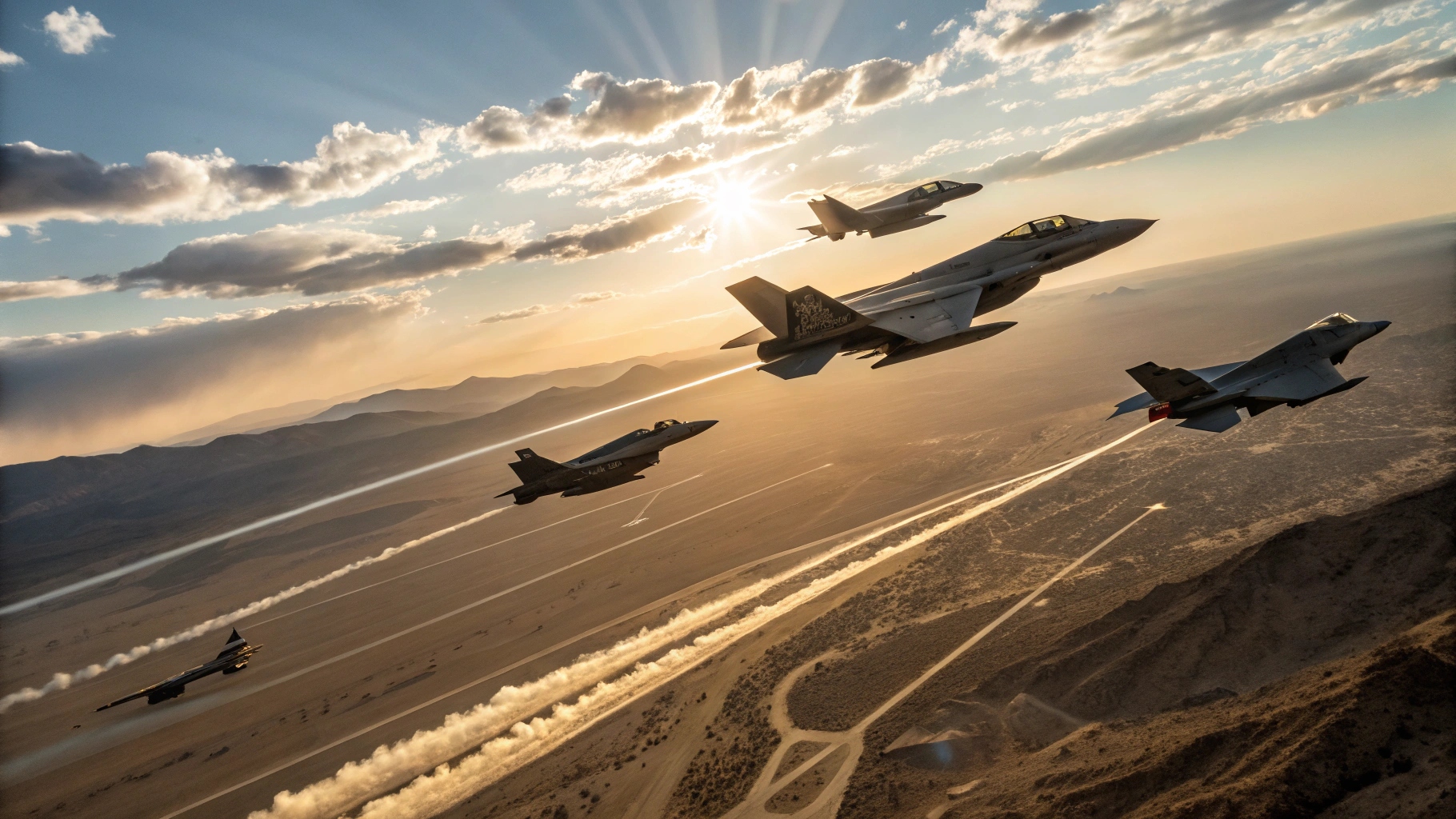
India’s AMCA fifth-generation stealth fighter programme is entering a decisive phase, with development speed, industrial participation and technological independence emerging as its main challenges. Conceptualised in 2006–2007, the programme is now under pressure to move towards prototype production while overcoming long-standing delays in defence project management. Former Air Chief Marshal RKS Bhadauria has pointed out that technological capability was not the only obstacle in earlier fighter programmes. Following the Light Combat Aircraft’s Initial Operational Clearance, competing priorities, procedural hurdles and organisational governance contributed significantly to delays. The AMCA programme is seeking to address these issues by opening prototype development and production bids to private industry through a Development-cum-Production Partner model. The three leading contenders are Tata Advanced Systems Limited, the Larsen & Toubro consortium with partners such as Dynamatic Technologies, and the Bharat Forge-led Kalyani Group consortium, which includes Data Patterns. Their respective strengths span aerospace structures and assembly, heavy engineering and precision mechanisms, as well as advanced metallurgy, forgings, landing gear and electronic warfare systems. The shift is intended to bring private-sector efficiency, competition and more agile project management into India’s combat aircraft manufacturing ecosystem. On the technology front, key priorities include indigenous AESA radar and electronic warfare systems, advanced propulsion, internal weapons bays and AI-enabled mission systems. The Uttam AESA radar is a central part of the effort to reduce dependence on foreign sensors. Initial AMCA production batches are planned to use the GE F414 engine, while future higher-thrust propulsion development is expected to involve international cooperation, including potential collaboration between Safran and GTRE. Internal weapons bays are being designed to accommodate precision-guided weapons, Astra-series air-to-air missiles and stand-off munitions without compromising stealth characteristics. Artificial intelligence-based data fusion, network-centric operations and cockpit access to space-based information are also expected to support future combat capabilities. China’s J-20 and J-35 deployments add strategic urgency to India’s programme, while the TEJAS Mk-2 and other interim upgrades are expected to help address immediate fighter squadron requirements. However, long-term operational independence will depend on domestic control of critical technologies. The AMCA’s progress will ultimately rely on disciplined timelines, effective coordination among the Ministry of Defence, DRDO, ADA, certification agencies and private manufacturers, and sustained government commitment.


