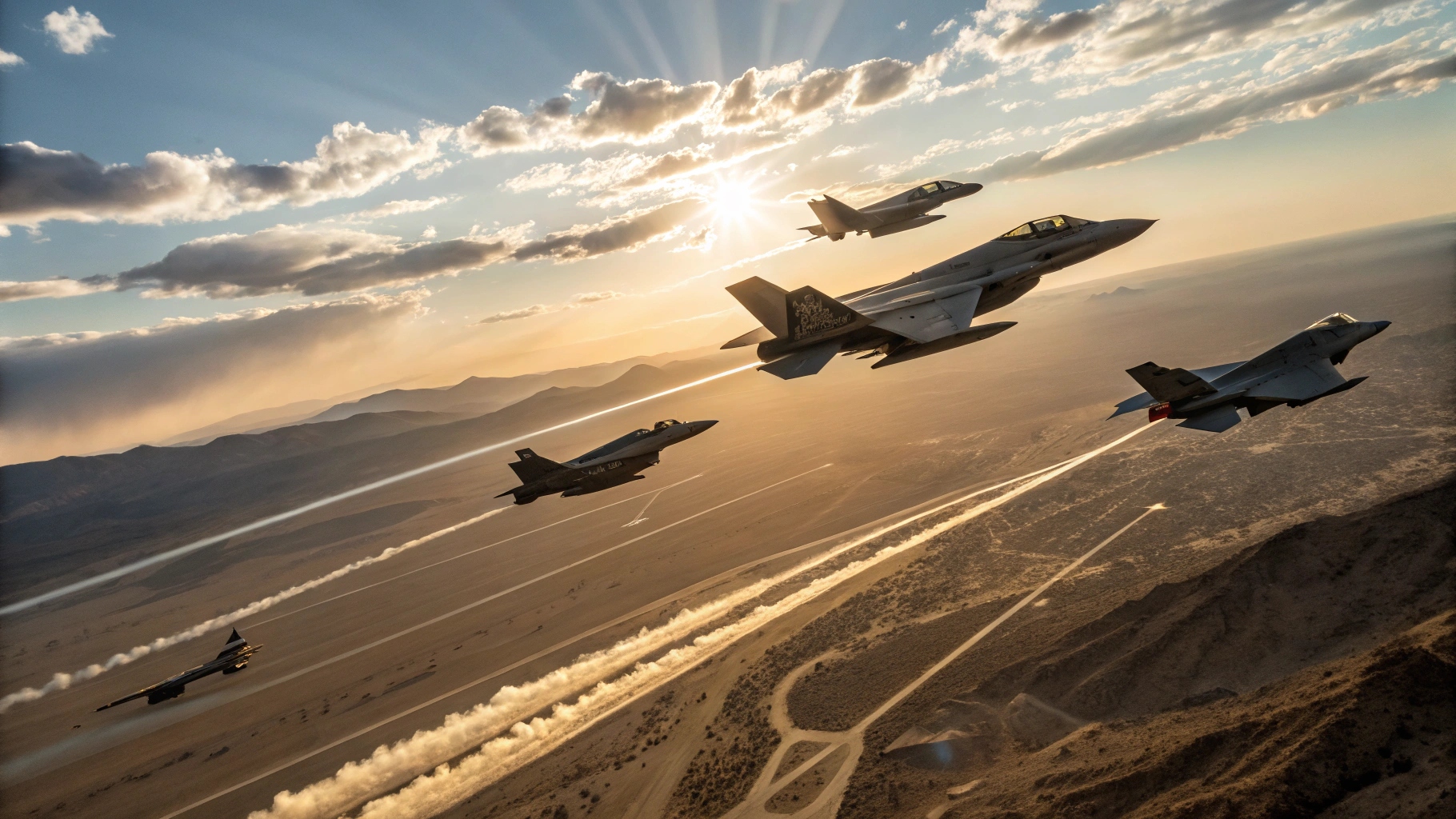

The ₹15,000-crore AMCA programme has moved closer to prototype development following the submission of bids by three private-sector groups competing to manufacture India’s future indigenous stealth fighter. The Aeronautical Development Agency, responsible for overseeing the project, will assess the proposals and select a development partner for the construction of five prototypes. The bidders are Tata Advanced Systems Limited, an L&T-led group involving Bharat Electronics Limited, and a Bharat Forge-led consortium that includes BEML. The final composition of the participating groups and their individual responsibilities will be established through the formal bid documentation and government announcements. The selected company will collaborate with ADA, a DRDO organisation, to build the aircraft prototypes at a planned aerospace facility near Puttaparthi, Andhra Pradesh. The site is intended to accommodate assembly, integration, and testing activities. Opening the competition to private companies represents a major change in India’s fighter development framework, where HAL has traditionally held a leading role in aircraft manufacturing. Under this arrangement, ADA will remain responsible for the aircraft’s design and technological development, while the selected industrial partner will execute prototype construction. The government expects this model to broaden private-sector involvement and develop domestic expertise in advanced military aircraft production. The AMCA is planned as a twin-engine, fifth-generation multirole combat aircraft featuring stealth characteristics, internal weapons carriage, advanced sensors, network-centric systems, and next-generation avionics. Its planned sensor-fusion capabilities are intended to support operations in heavily contested environments. The initial version is expected to be powered by GE F414 engines, with a more powerful engine planned for a later variant through an international development partnership. These specifications are still part of the development programme and have not yet been demonstrated in operational service. A major challenge will be turning the current design into flight-capable prototypes and validating the aircraft through extensive ground and airborne trials. The work will involve several interconnected areas, including airframe production, engines, avionics, mission systems, software, weapons integration, and flight testing. Even after prototypes are completed, the aircraft will require substantial testing and certification before the government can consider serial production and induction. The procurement process began with the Ministry of Defence issuing a Request for Proposal to the three shortlisted companies in May 2026. Technical and commercial evaluations, bidder selection, and contract finalisation are the next stages. The government is reportedly aiming for a first prototype flight in 2028–29, although some industry estimates place the milestone in the early 2030s. Actual progress will depend on the selection process and the performance of the development programme. The IAF expects the AMCA to become an important component of its future combat fleet, providing an indigenous fifth-generation capability and reducing reliance on overseas fighter platforms. The programme also offers participating companies an opportunity to build advanced manufacturing capabilities and contribute to a strategically important national project. Its eventual success will depend on effective coordination between the selected company, ADA, and DRDO, alongside careful management of technical challenges, development schedules, and certification requirements.