

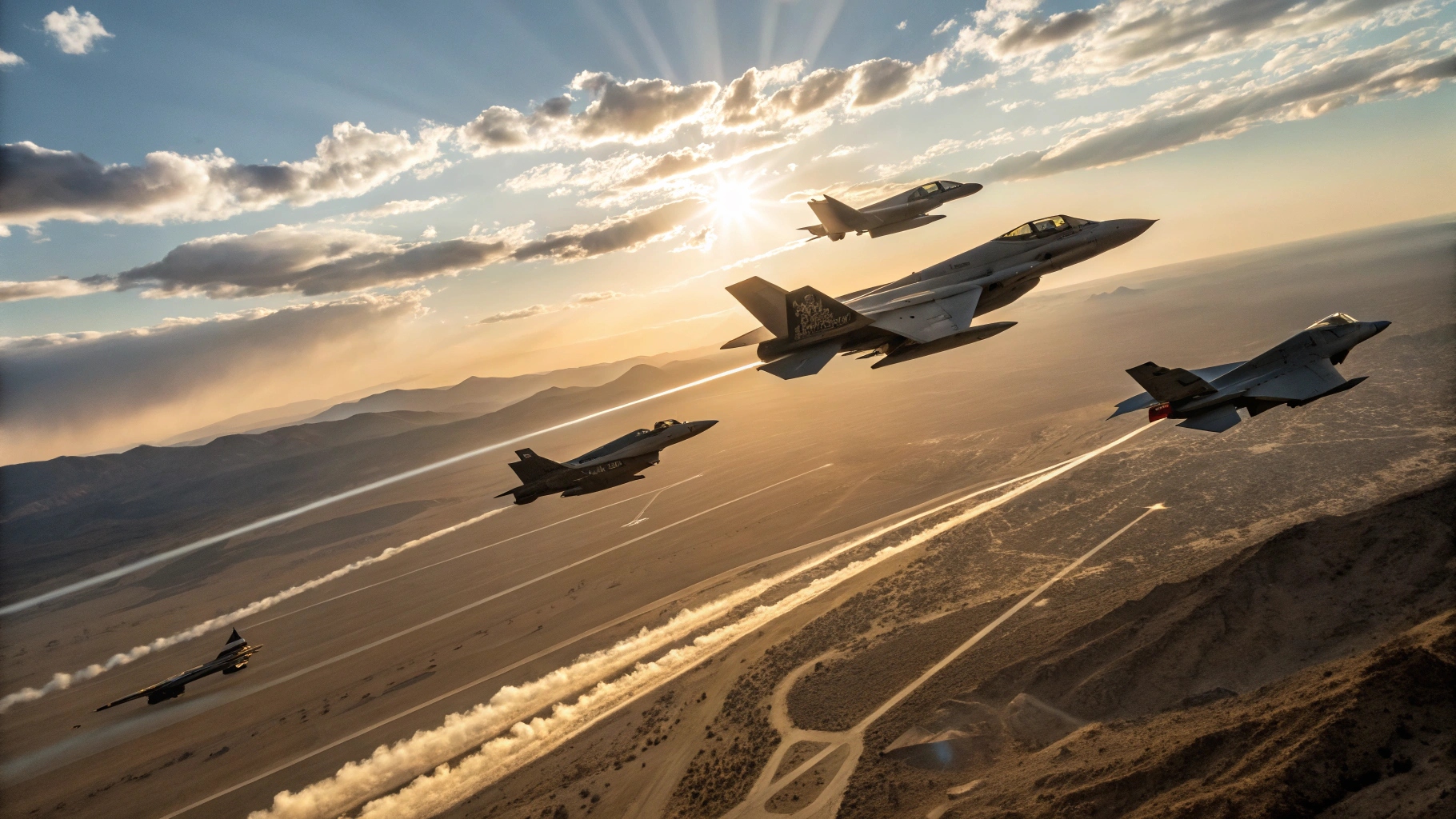
The Su-57’s external appearance reflects a different approach to camouflage compared with the relatively uniform grey finishes used on aircraft such as the F-22 Raptor and F-35 Lightning II. The Russian fighter employs a geometric, pixel-style pattern intended to break up its visual silhouette. Its low-observable characteristics also depend on aerodynamic shaping, airframe construction and radar-absorbing materials. Some of these materials can absorb radar energy and convert it into heat, requiring layered treatment to control thermal effects. American fifth-generation fighters are generally designed around long-range detection, beyond-visual-range engagement and rapid disengagement, supported by AESA radars and low-observable features. The Su-57’s camouflage is described as potentially complicating visual identification and automated tracking by computer-vision systems used on reconnaissance platforms. This approach is linked in the source to Russian planning for contested environments in which stealth advantages may diminish at closer ranges, making manoeuvrability, deception and survivability increasingly important.


