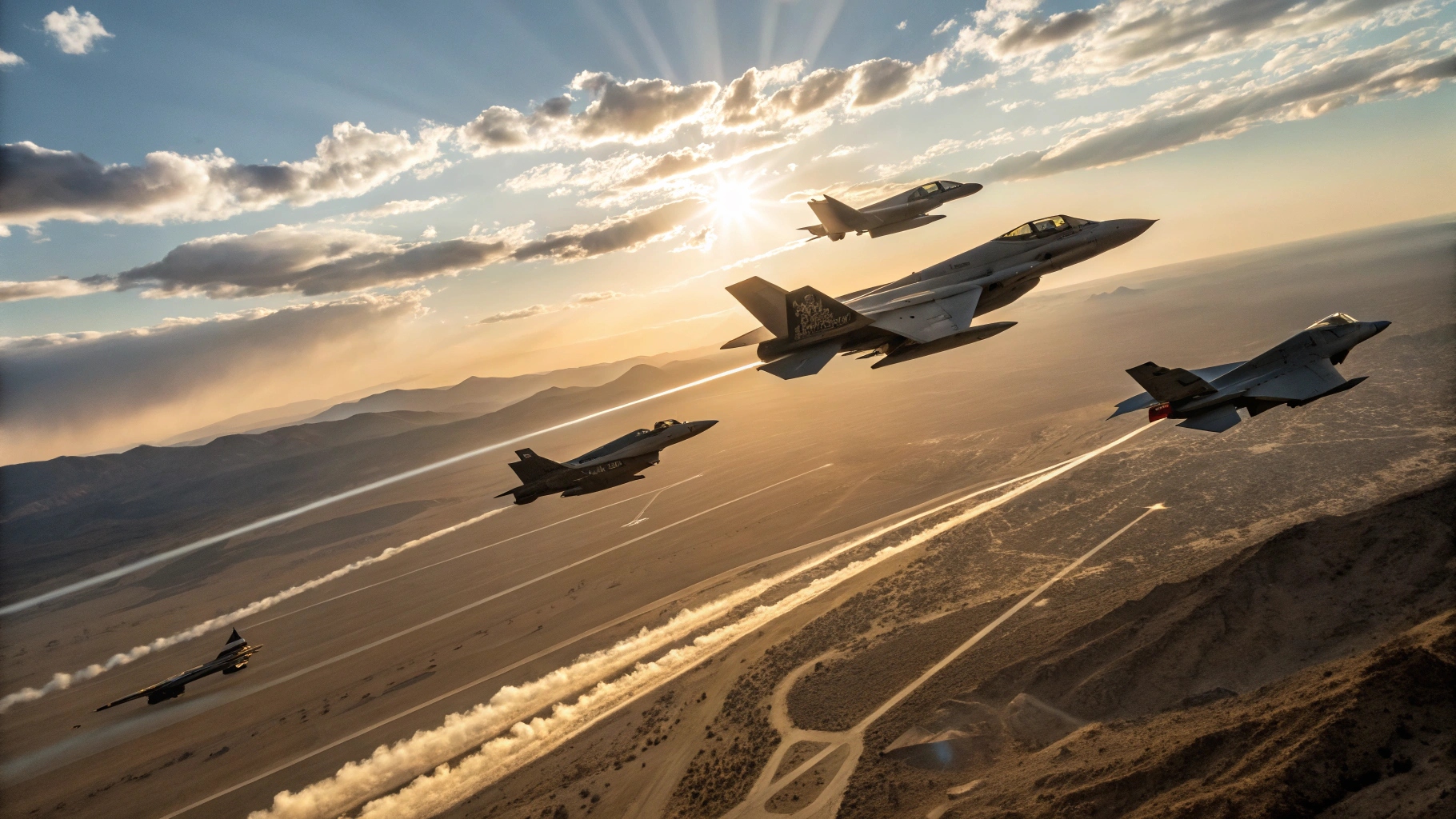

South Korea has formally begun exploring the technologies and design concepts that could underpin its first indigenous sixth-generation fighter. The country’s Defense Acquisition Program Administration issued a Request for Proposal on August 21 for a conceptual study covering the future aircraft’s mission requirements, configuration, and technological development path.The current effort is deliberately limited in scale. DAPA has set aside about 900 million won for a study lasting 14 months. Rather than funding construction of an aircraft, the programme is intended to determine which technologies and design approaches could form the basis of a future development effort.A final decision to launch a full next-generation fighter programme is not expected until later in the decade. Nevertheless, the requirements contained in the RFP provide an early indication of the performance level South Korea is considering.Two competing stealth layouts are to be assessed. One will investigate a completely tailless fighter, while the other will consider different methods of controlling the aircraft. This approach could allow engineers to compare the benefits and limitations of alternative aerodynamic solutions before committing to one configuration.Stealth requirements are particularly ambitious. DAPA wants the study to examine low-observable performance across L, S, and X radar bands. This suggests that future survivability requirements will extend across multiple detection frequencies.The propulsion concept is equally advanced. The aircraft is expected to employ two adaptive-cycle engines with sufficient performance for sustained supersonic cruise. Adaptive propulsion technology could provide greater flexibility between high-speed performance and fuel efficiency, making it an important component of future combat aircraft designs.The proposed fighter would also feature a single pilot and an internal weapons bay. These characteristics reinforce the emphasis on a purpose-built stealth aircraft rather than an existing design modified to incorporate low-observable features.Separately, South Korea’s Agency for Defense Development has already shown a concept that illustrates one possible direction. The concept was presented at an Air Force aerospace weapons technology conference in July and was described as an experimental design generated through research into rapid airframe modelling, flight-performance analysis, and radar-cross-section evaluation.The ADD aircraft is characterized by a twin-engine tailless configuration. Its blended fuselage, double-delta wing, and canards give it a distinctive appearance while eliminating traditional vertical and horizontal stabilizers.The concept is estimated to measure approximately 16 metres in length with an 11-metre wingspan. Three internal weapons compartments have been depicted, including a central bay designed around four Meteor missiles and two smaller lateral bays for IRIS-T short-range weapons.Additional stealth features include S-shaped engine inlets designed to conceal compressor faces from radar. The concept also shows thrust-vectoring propulsion, which could help compensate for some of the control challenges associated with a tailless configuration.Although the ADD concept and DAPA study are not formally the same programme, their close timing makes the research relevant to South Korea’s emerging fighter-development strategy. Ideas generated by ADD could potentially contribute to future government-led design studies.The initiative represents another stage in South Korea’s development as an advanced military aerospace power. Experience gained through the KF-21 programme has created a foundation in aircraft design, manufacturing, systems integration, and indigenous technology development.South Korea’s sixth-generation fighter remains years away from becoming an operational aircraft. However, the current studies demonstrate that Seoul is already examining the combination of advanced stealth, adaptive engines, internal weapons, and autonomous or digitally enabled technologies that are increasingly associated with future air-combat systems.