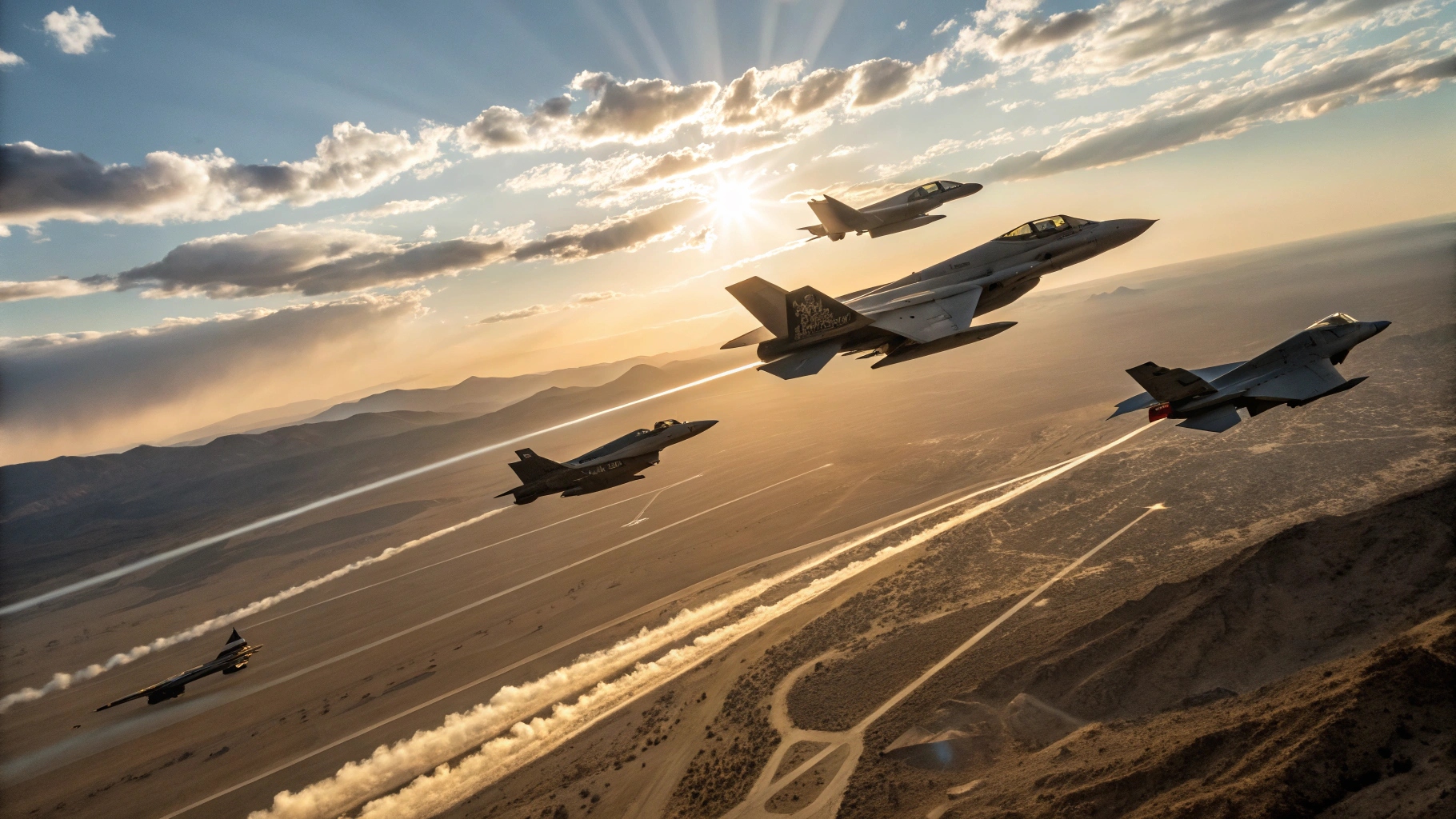

The TEJAS programme has reached a major transition point, with HAL closing out the first 40-aircraft Mk-1 order while trying to accelerate Mk-1A deliveries despite continuing GE engine shortages. The twin-seat trainer portion of the original programme has faced delays, while the F404-IN20 supply chain has emerged as the principal constraint on the upgraded fighter’s production rate.The initial IAF TEJAS contract covered 40 aircraft: 16 IOC-standard single-seat fighters, 16 FOC-standard single-seat fighters and eight twin-seat trainers. Delivery of the last two trainers completes this foundational order and marks another step in the development of India’s domestic combat-aircraft manufacturing capability.HAL’s immediate priority is the Mk-1A, which adds several new systems intended to increase operational effectiveness. Production, however, has been affected by late F404-IN20 deliveries from GE Aerospace. Only ten engines had arrived according to the supplied report, leaving a significant number of assembled aircraft unable to proceed to full flight activity. HAL had produced around 30 Mk-1A airframes, with approximately 20 involved in preliminary flight work.To address the propulsion bottleneck, HAL has invoked contractual penalties against GE, while the US company has promised to raise engine output to 24 units in 2026–27 and 30 units per year thereafter. The IAF is targeting its first Mk-1A squadron for March 2027 and expects a strength of 18–20 aircraft including trainers. The requirement is particularly urgent because the service operates well below its sanctioned fighter-squadron strength, with MiG-21 retirements adding to the gap.Manufacturing infrastructure is also being expanded. HAL’s Nasik line, commissioned in October 2025, provides capacity for 24 fighters annually and is planned to reach 30 by FY2028. Establishing production outside Bangalore creates greater industrial redundancy. The Mk-1A supply chain also includes private companies such as L&T, Lakshmi Machine Works and Dynamatic Technologies, which are producing wings, fuselage structures and other precision assemblies. Work is distributed among industrial centres including Hyderabad and Coimbatore, creating a broader domestic aerospace ecosystem.In capability terms, the Mk-1A features the EL/M-2052 AESA radar, indigenous electronic warfare equipment, BVR weapon capability, software-defined communications and improved onboard diagnostics. Aircraft have undergone integration testing involving ASRAAM and Astra missiles. The IAF has permitted certain exemptions to enable early aircraft acceptance, but key capabilities—including radar-to-EW integration and missile firing—remain essential for induction.HAL has reported five aircraft ready for delivery and nine more completed and flown but waiting for engines. The company had targeted five Mk-1A deliveries by March 2026, followed by a higher rate as propulsion supplies improve. The November 2025 agreement for 113 additional engines is intended to support the second 97-aircraft batch and provide longer-term programme stability.