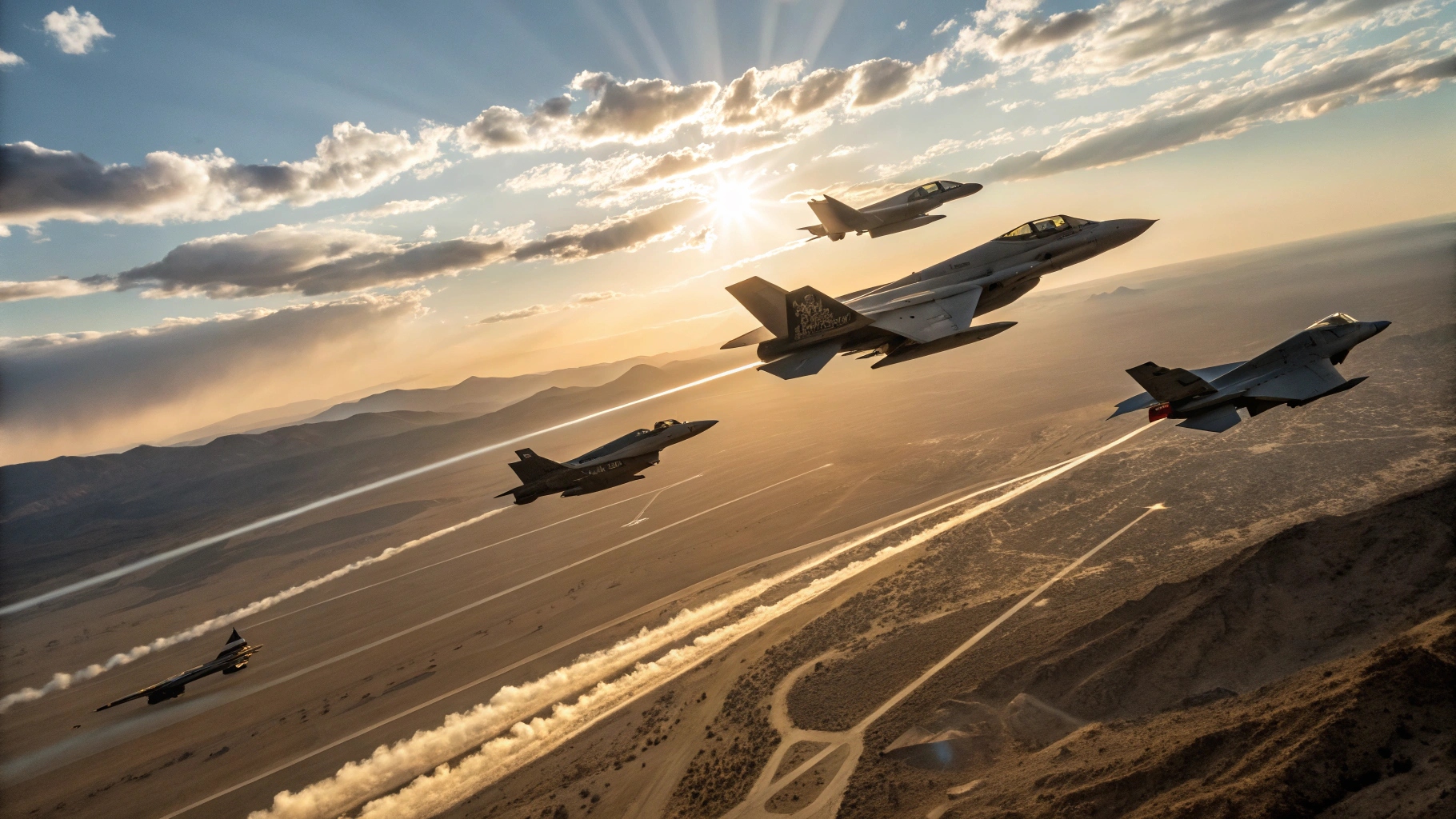

The AMCA programme is giving India’s private aerospace industry a much larger role while keeping strategic authority with the government. Tata Advanced Systems Limited, Larsen & Toubro and Bharat Forge are among the companies expected to participate, but the Aeronautical Development Agency continues to serve as the design authority.
Private consortia will partner with ADA to build AMCA prototypes and support the transition toward production. Their work is expected to cover manufacturing, production engineering, systems integration, industrialisation and other activities needed to establish a serial-production base.
The greater involvement of private industry does not mean that control of the fighter’s core design is being transferred. The Government of India and ADA will continue to direct key areas such as configuration, stealth design, mission systems, flight-control laws, software architecture and certification.
The model therefore creates a clear division between industrial participation and sovereign control. Private companies can provide investment, manufacturing capacity and engineering resources, while sensitive technologies remain under government oversight.
India is also following what can be described as a selective approach to foreign cooperation. Overseas original equipment manufacturers may be involved where India needs specific capabilities, potentially including propulsion, advanced avionics, specialised materials and other niche technologies.
Such cooperation would be governed by technology-transfer arrangements and security measures. Foreign suppliers could contribute individual technologies or subsystems, but they would not control the AMCA programme or hold design authority over the aircraft.
Personnel security is another key element. International experts may be used for commercial, advisory or non-sensitive engineering activities, but access to classified design information, mission software, stealth technologies and sensitive systems integration is expected to be restricted to Indian citizens with appropriate security clearances.
This arrangement is intended to protect technical data as well as operational concepts, manufacturing knowledge and future upgrade plans. Keeping these areas under Indian control would allow the country to improve and adapt the aircraft independently throughout its operational life.
Intellectual-property ownership also remains important. While private companies can manufacture and integrate major aircraft sections, the government’s ownership of core design information, flight-control algorithms, mission architecture and indigenous technologies is expected to preserve India’s ability to upgrade and export the aircraft.
Overall, the AMCA model combines the industrial strengths of private companies with government control over strategic technology. It aims to increase manufacturing efficiency without giving up sovereign authority over a major national combat-aircraft programme.