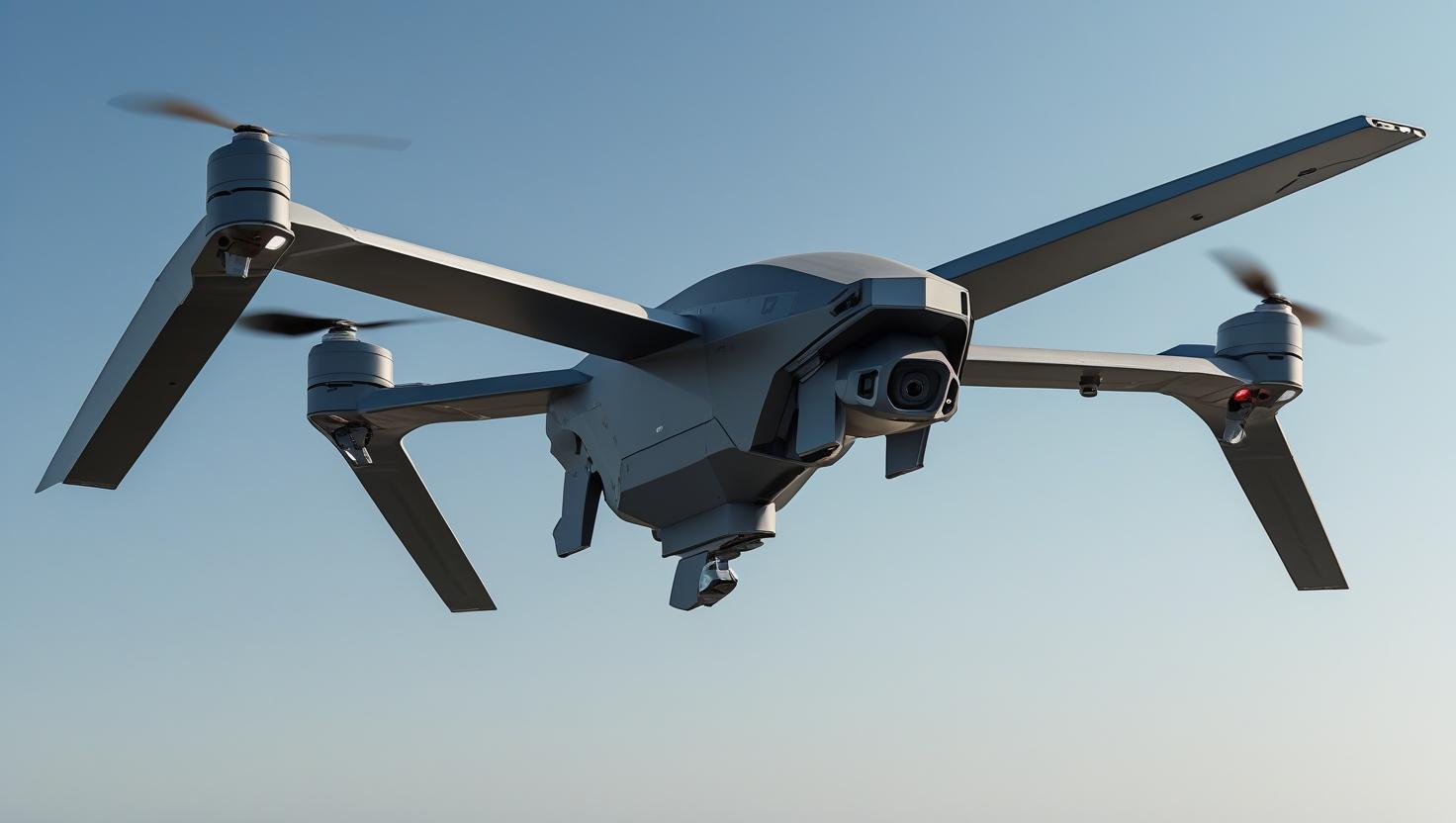

India’s indigenous defense manufacturing sector has reached another milestone with Solar Defence and Aerospace Ltd. beginning deliveries of the Nagastra-2 anti-tank loitering munition to the Indian Army. Developed by the Nagpur-based company, the system integrates airborne surveillance with precision-strike capabilities and is equipped with day-and-night imaging cameras and a 4 kg tandem shaped-charge warhead. SDAL states that the warhead can defeat armor protection of up to 650 mm of Rolled Homogeneous Armour, making the munition suitable for engaging armored battlefield targets. The platform can operate at distances of up to 25 km when configured for recovery and reuse, or 50 km in fire-and-forget mode. Its flight endurance of up to one hour enables operators to search for, observe and assess potential targets before launching an attack. Another major feature is its Electronic Counter-Countermeasures capability, designed to help the system maintain mission effectiveness against communications jamming, GPS disruption and spoofing. Nagastra-2 completed technical trials at the Mahajan Field Firing Range in August 2026, with Army personnel reportedly observing its operational performance and ECCM compliance. Its introduction builds on the Indian Army’s procurement of around 450 Nagastra-1R systems in 2025. The earlier variant includes a fully reusable launcher, a 360-degree gimbal camera and an optional thermal camera for night missions. Encrypted video and telemetry links support secure communications, while its reported targeting accuracy is approximately two metres in circular error probable. More than 80% of the Nagastra-1R’s content is indigenous, according to the supplied report. Testing across environments such as Ladakh and Babina in Uttar Pradesh has further demonstrated the family’s adaptability to different operating conditions. The arrival of Nagastra-2 strengthens India’s efforts to develop domestic precision weapons and gives the Army another option for engaging armored threats while operating in environments affected by electronic warfare.