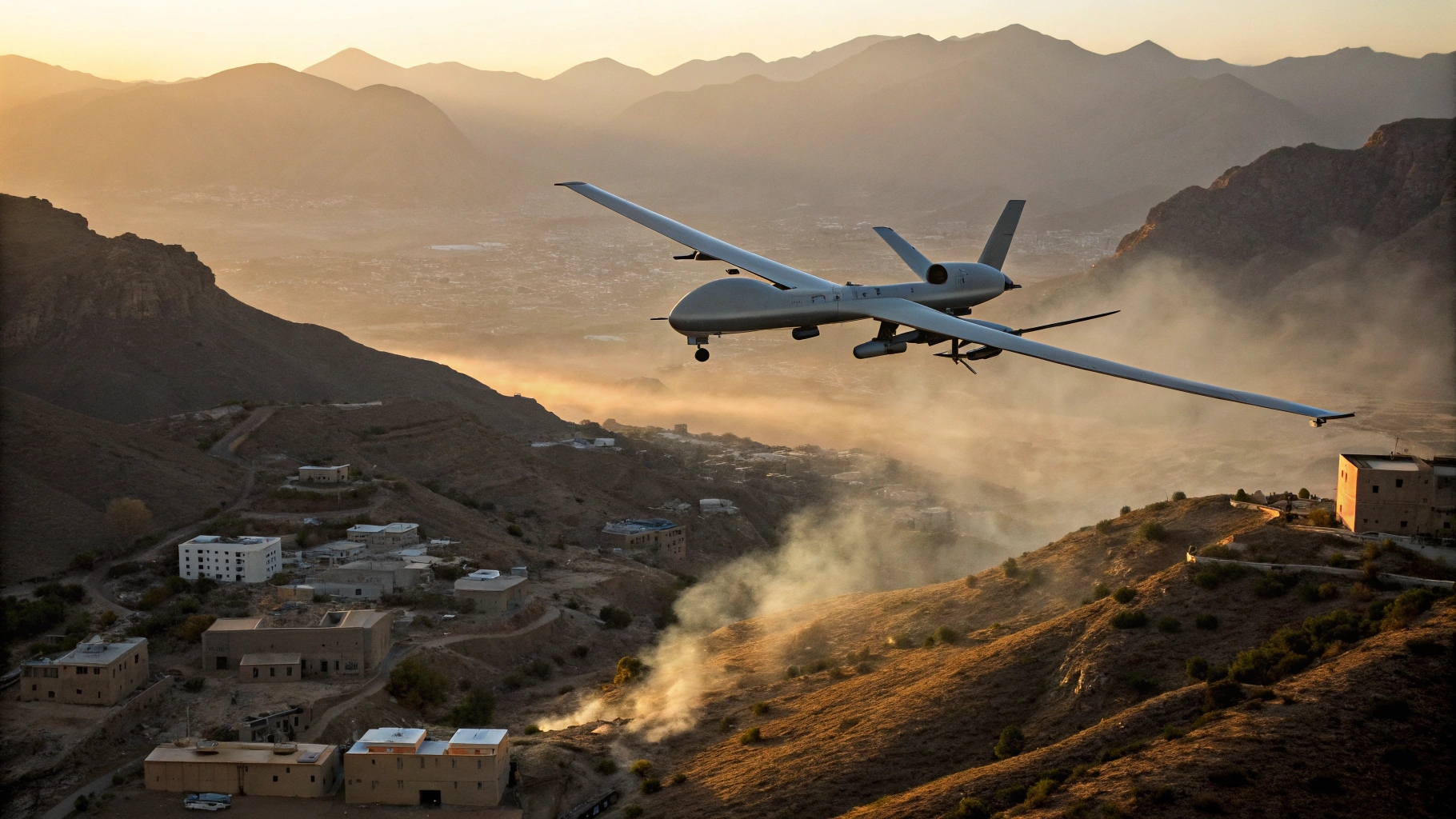
General Atomics’ MQ-9B SeaGuardian is a maritime-focused remotely piloted aircraft developed from the MQ-9B SkyGuardian. It combines a long-endurance airframe with specialised sensors to deliver persistent intelligence, surveillance and reconnaissance over large ocean areas. Designed for military and civilian users, the platform supports maritime domain awareness, vessel tracking, search and rescue and disaster-response assessments. An optional acoustic-surveillance package extends its capabilities to underwater monitoring. India’s MQ-9B Fleet: India has emerged as a major operator of the aircraft family. The Indian Navy began using two contractor-owned SeaGuardians on lease in 2020, building operational experience in long-duration surveillance missions across the Indian Ocean Region. In October 2024, India finalised a 31-aircraft MQ-9B acquisition comprising 15 SeaGuardians for the Navy and 16 SkyGuardians for the Army and Air Force. Deliveries remained pending as of November 2026. The Ministry of Defence also signed a separate 30-month lease in August 2026 for two additional SeaGuardians, maintaining operational continuity ahead of the larger fleet’s introduction. The SeaGuardian can undertake maritime patrol, intelligence collection, anti-submarine warfare, anti-surface warfare, airborne mine countermeasures and search-and-rescue operations. Its endurance enables persistent monitoring of key sea lanes and maritime approaches. Weapons and Payload Options: The aircraft has nine external hardpoints—eight wing stations and one centreline station—along with an internal payload bay. Depending on customer requirements and integration, potential payloads include Mk 54 lightweight torpedoes, AGM-114 Hellfire missiles, precision-guided munitions and sonobuoy dispensers carrying up to 40 A-size or 80 G-size sonobuoys. The exact weapons configuration of the Indian Navy’s SeaGuardian fleet has not been publicly confirmed. Although the aircraft is not supplied with standard armament, India’s wider MQ-9B acquisition included AGM-114R Hellfire missiles. Sensors and Networked Operations: Its maritime sensor configuration can include a 360-degree surveillance radar, high-definition electro-optical and infrared sensors, Automatic Identification System receivers and electronic support measures. These systems help identify contacts, track vessel movements and maintain awareness across wide maritime areas. Optional anti-submarine warfare equipment supports underwater detection and tracking through networked sonobuoy operations. Satellite communications enable beyond-line-of-sight missions, while Link 16 networking, automatic take-off and landing functions and sonobuoy management systems support coordinated operations. The aircraft can work alongside crewed platforms such as the P-8I Poseidon and naval surface combatants. Lightning protection, de-icing equipment and Detect and Avoid technology improve survivability and operational flexibility, including integration into civilian and NATO-controlled airspace. The platform was developed with airworthiness certification requirements in mind. Dimensions and Performance: The runway-operated aircraft features a long-span wing, V-tail and rear-mounted pusher propeller. It is 11.7 metres long, has a 24-metre wingspan and uses a Honeywell TPE331-10 turboprop engine. Its fatigue- and damage-tolerant airframe has a projected service life of 40,000 flight hours. Depending on configuration, it can fly above 40,000 feet, reach up to 210 knots true airspeed, remain airborne for more than 30 hours and cover over 5,000 nautical miles. Maximum external payload capacity is 2,155 kg, with another 363 kg available internally. Equipment configurations can include maritime radar, electro-optical and infrared imaging, AIS receivers, signals-intelligence systems, electronic support measures, airborne early-warning systems and communications-relay equipment. Development and Variants: The MQ-9B programme began as the Type-Certifiable Predator-B. Its development aircraft first flew in November 2016, followed by the first production-representative SkyGuardian in March 2020. SeaGuardian was developed as the maritime adaptation, retaining the common airframe while incorporating removable maritime mission systems. General Atomics demonstrated its capabilities through open-water trials off Southern California, additional validation flights and demonstrations with European air forces. Subsequent testing included sonobuoy dispensing and advanced maritime surveillance missions. The wider MQ-9B family includes SkyGuardian for baseline ISR missions, SeaGuardian for maritime operations, the UK’s Protector RG Mk1, Canada’s CQ-9B Guardian and a Short Take-Off and Landing variant still under development. A Saab-developed Airborne Early Warning configuration has also expanded the family’s surveillance capabilities through radar-based airborne monitoring. Tri-Service Benefits for India: The Navy can use SeaGuardian for persistent monitoring across the Indian Ocean Region and earlier detection of suspicious vessels, submarines and emerging threats. The Army gains long-endurance surveillance, reconnaissance and target-acquisition capabilities over remote border sectors, while the Air Force can use the platform for strategic monitoring, intelligence gathering and network-centric operations. Shared information across the three services could improve situational awareness and coordination across land, air and maritime domains. The MQ-9B family therefore offers India a multi-mission capability combining endurance, advanced sensors and networked operations to support surveillance of its strategic interests.