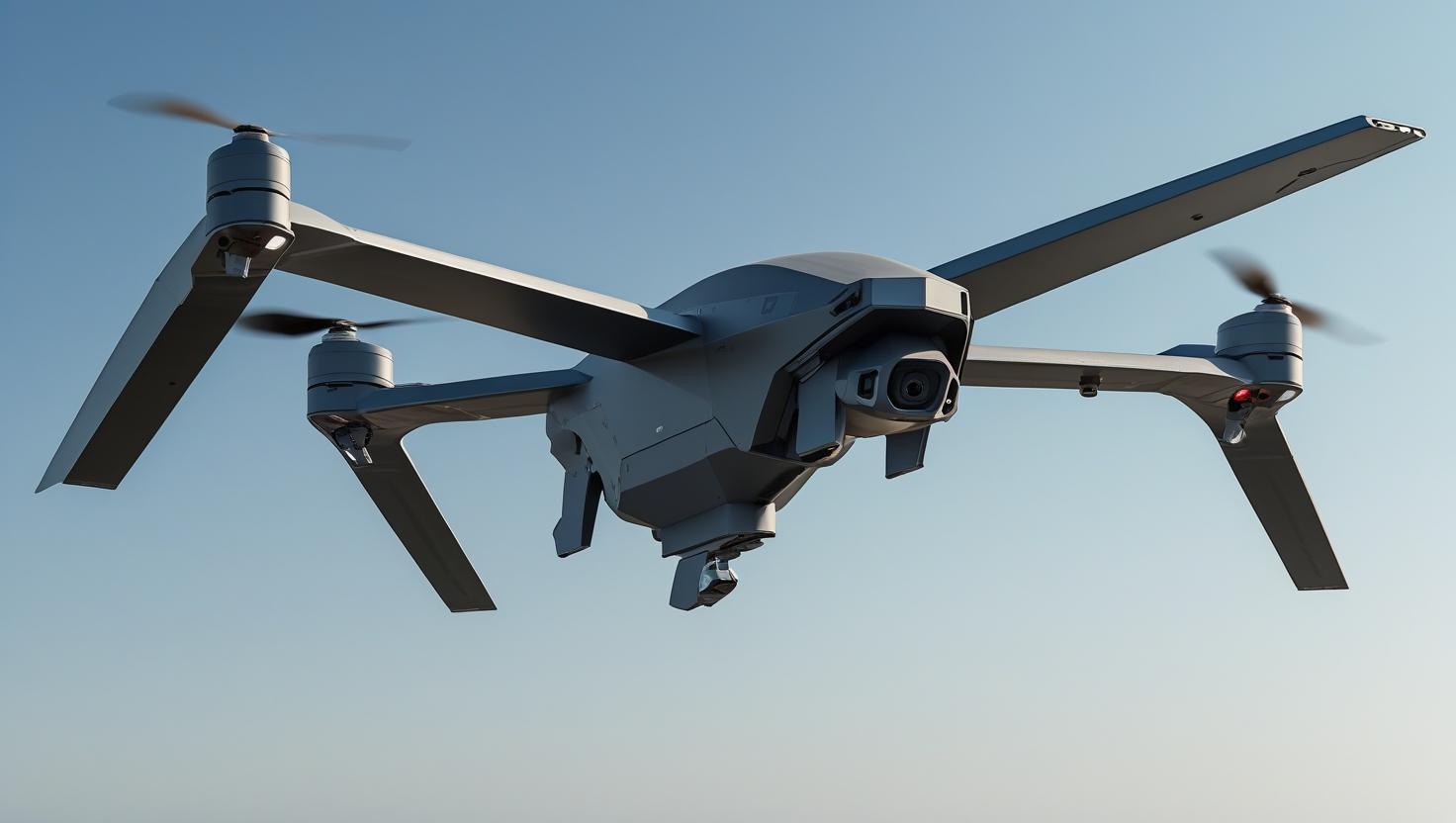

The Indian Army’s Design Bureau has reviewed Garuda Aerospace’s domestic drone-development and manufacturing capabilities during an inspection of the company’s Chennai centre by Major General Gopal Kapoor, Additional Director General of the Army Design Bureau. The assessment covered Garuda’s production infrastructure, technology development and efforts to increase indigenous content in defence drones.During the interaction, Garuda presented details of its defence-oriented projects, research programmes, manufacturing capabilities and partnerships. The company also outlined its pilot-training ecosystem, including its Remote Pilot Training Organisations. Garuda said these facilities are linked to a broader proposal before the Chief of Defence Staff to provide drone training to 80,000 Agniveers from the Army, Navy and Air Force.The Chennai complex spans around 50,000 square feet and brings multiple stages of the drone lifecycle together under one facility. Its capabilities include product design, prototyping, manufacturing, testing and deployment, supported by injection moulding, industrial 3D printing and battery assembly/testing infrastructure.More than 50 PhD researchers reportedly contribute to the company’s technical work, with expertise covering PCBs, RF antennas, communication technologies and Ground Control Stations. Army representatives also reviewed Garuda’s vulnerability-checking and testing framework. The company conducts these activities with authorised agencies to ensure compliance with defence-related testing requirements.The visit was presented as part of the broader effort to expand India’s indigenous defence-drone industry. Major General Kapoor highlighted the importance of domestic capability development and R&D under the Atmanirbhar Bharat initiative. The engagement reinforced the idea of developing and producing critical drone technologies within India rather than relying predominantly on foreign suppliers.Garuda Aerospace CEO and founder Agnishwar Jayaprakash said a self-reliant defence ecosystem would require close cooperation between private industry, government institutions, academic organizations and the armed forces. He described the visit as a significant opportunity to demonstrate the company’s contribution to India’s drone sector and reaffirmed its goal of supporting the country’s emergence as a global hub for indigenous drone technology and production.