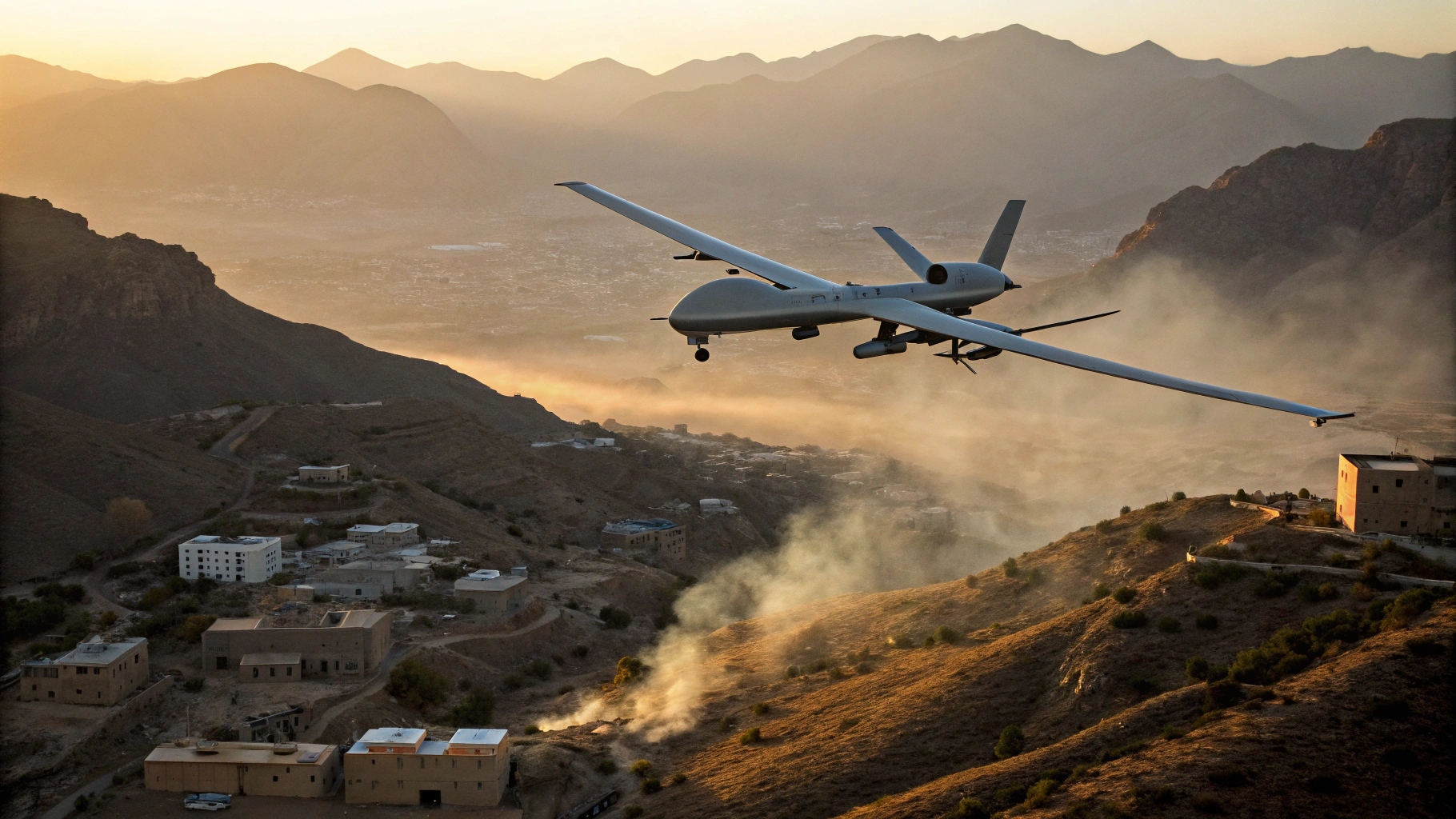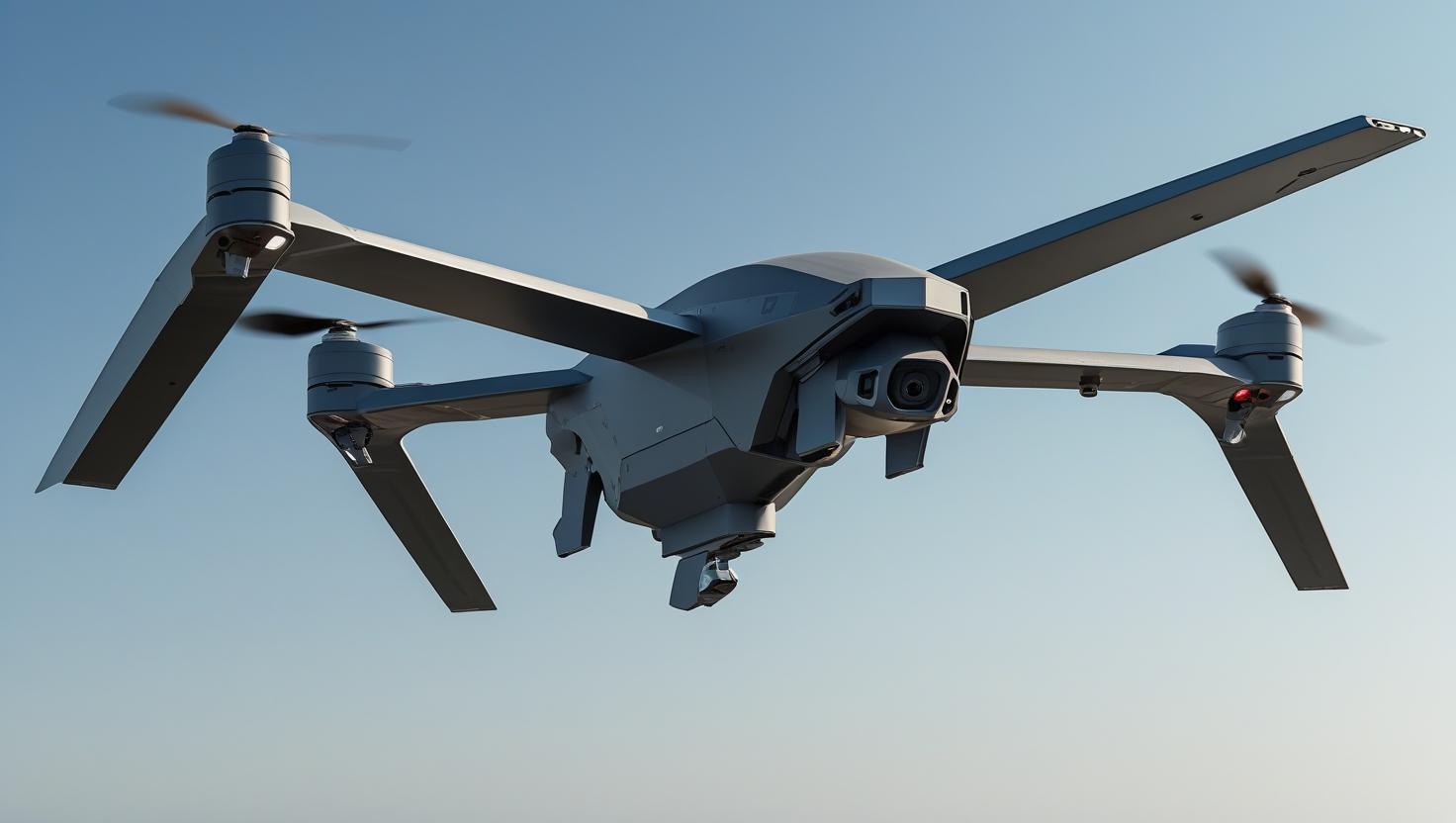

The Drishti-10 and DRDO’s TAPAS-BH-201 represent two approaches to India’s MALE unmanned aerial vehicle capability. Both are intended to provide long-duration ISR coverage, but they differ in their development origins and technology ecosystems. Drishti-10 is an industry-led platform, while TAPAS is the result of a long-running indigenous programme involving DRDO and Indian industry. TAPAS has been designed with domestic avionics, sensors and communications technologies, making it part of India’s broader effort to develop an independent MALE UAV ecosystem. Its Ku-band SATCOM system enables beyond-line-of-sight operations beyond 1,000 km, allowing the aircraft to operate at distances where conventional ground-control communications would not be sufficient. Drishti-10 also incorporates satellite-based BLOS connectivity. Consequently, SATCOM availability alone does not establish a clear technological lead. The more meaningful question is how much of the communication chain, including encryption, terminals, data links and network integration, remains under Indian control. Radar systems provide another important area for assessment. TAPAS has been linked with an indigenous LRDE-developed SAR system capable of functions such as strip-map imaging, spotlight imaging and GMTI. These capabilities allow the UAV to conduct persistent monitoring over broad areas and identify movement on the ground. Drishti-10’s TS-80 radar is similarly advertised with SAR and GMTI functions. However, comparing radar systems solely through advertised resolution figures can be misleading. Operational effectiveness also depends on range, clutter rejection, processing algorithms, antenna performance, software and the ability to integrate information into a larger intelligence network. In terms of basic flight performance, publicly cited specifications place Drishti-10 at about 25,000 feet, with approximately 15.5 hours of endurance and a payload of around 300 kg. TAPAS figures are generally associated with about 28,000 feet of altitude, 18 hours of endurance and approximately 350 kg of payload. On those published numbers, TAPAS may have an edge in several core performance categories. Sensor technology creates a more nuanced comparison. TAPAS is equipped with the indigenous CAMOP electro-optical/infrared payload, which includes laser ranging and target-designation functions. At approximately 55 kg, the system is designed to balance sensor capability with payload efficiency and represents the evolution of India’s previous MREO and LREO development efforts. Drishti-10’s Spectro XR takes a different approach by incorporating SWIR technology. This can improve imaging performance in challenging conditions such as haze, dust and smoke. Therefore, the relative advantage between the two UAVs may ultimately depend less on headline specifications and more on operational testing, sensor integration, reliability and mission requirements.