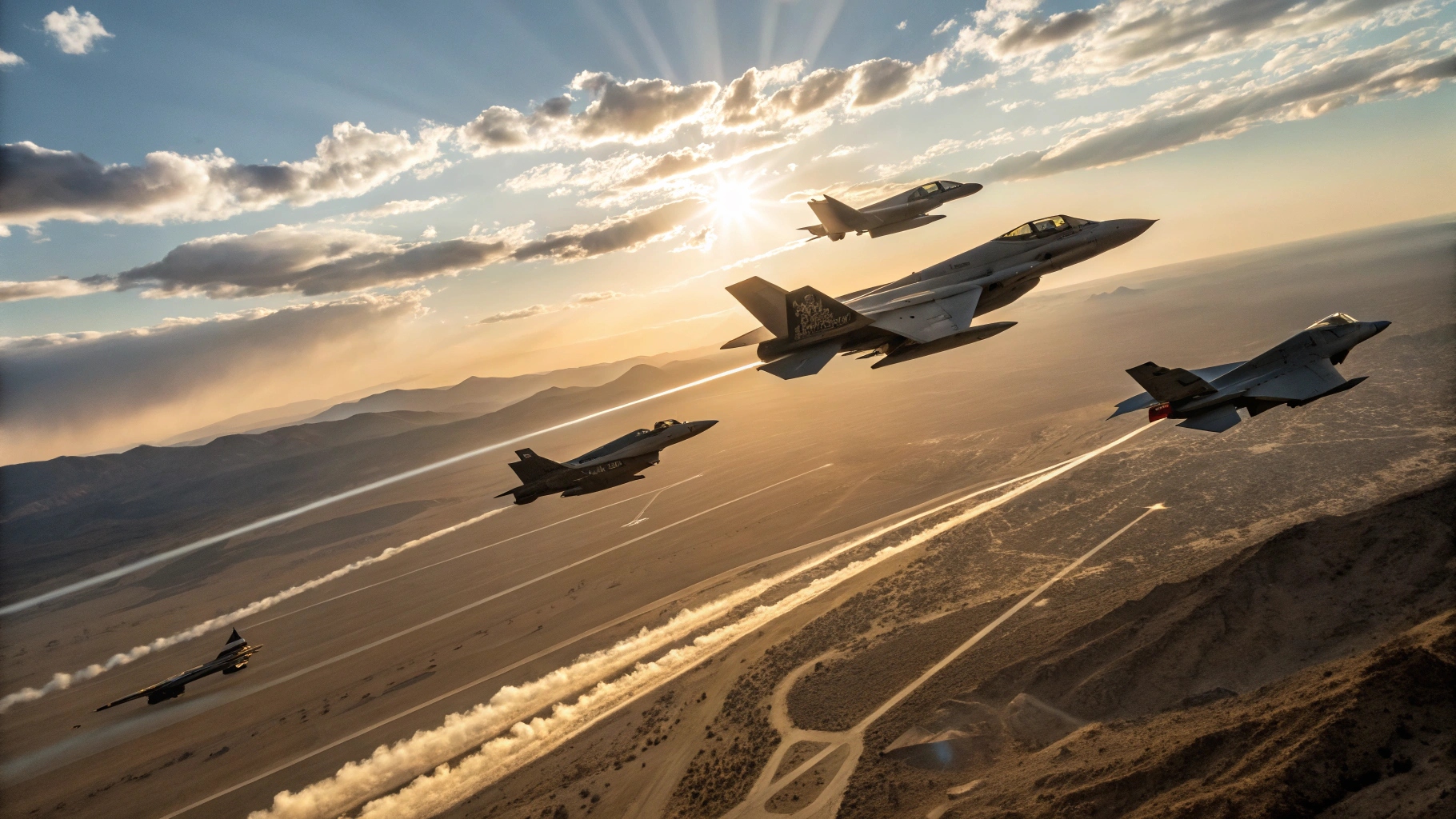

The US Air Force has chosen Raytheon’s PhantomStrike radar to equip its autonomous X-62A VISTA test aircraft, marking a significant step forward in advanced sensor integration and artificial intelligence flight experimentation. The selection forms part of a phased upgrade plan designed to expand VISTA’s role in testing autonomous combat aviation technologies.
PhantomStrike is a lightweight, fire-control radar leveraging gallium nitride technology to deliver high performance while minimizing power consumption and cooling requirements. With a weight of less than 150 pounds, the radar is tailored for use on uncrewed aircraft systems, light combat aircraft, and helicopters, addressing operational needs where payload and power efficiency are critical.
Raytheon states that the radar’s digital beam steering and beamforming capabilities allow it to perform multiple mission functions simultaneously, including integrated air and ground surveillance and targeting. This multi-mode functionality provides advanced situational awareness at a reduced cost compared with legacy AESA radars, making PhantomStrike a scalable solution for future air combat platforms. The system successfully completed its first flight test in May, validating its operational readiness.
The X-62A VISTA, a modified F-16D, was developed by Lockheed Martin Skunk Works and Calspan and serves as a unique test aircraft for AI-enabled flight control, autonomy, and software experimentation. In February 2023, VISTA made history by completing its first flight piloted by an AI agent, demonstrating within-visual-range maneuvering against simulated adversaries. Planned 2025 upgrades will push the aircraft into more demanding test scenarios focused on AI collaboration, integration, and real-time decision-making, reinforcing the USAF’s roadmap toward autonomous air combat operations.