

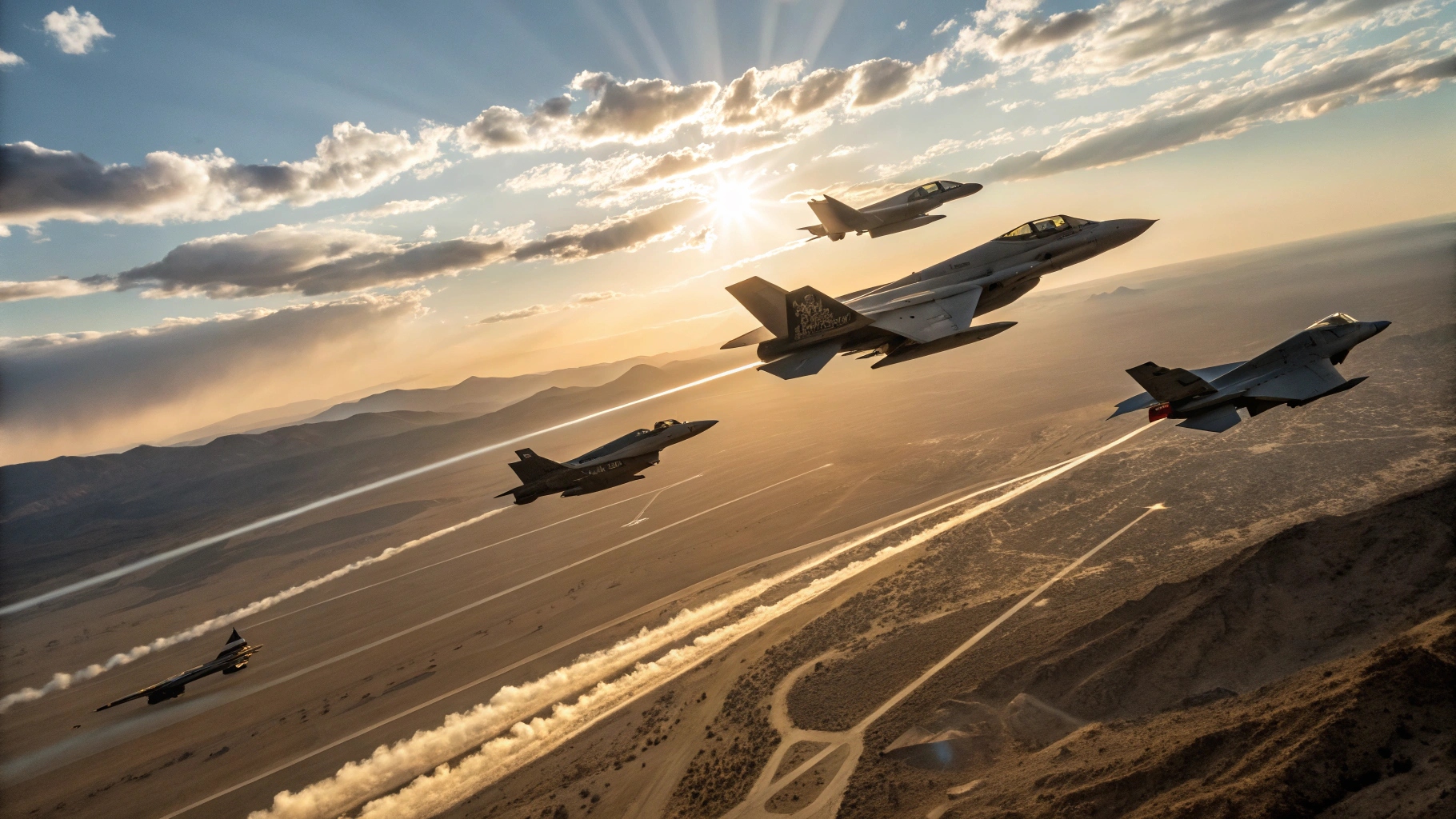
The U.S. Air Force has entered a new phase of pilot training with the formal induction of its first T-7A Red Hawk advanced trainer into operational service. The milestone was marked at Joint Base San Antonio–Randolph, Texas, where Air Force officials highlighted the aircraft’s role in transforming how future pilots are prepared for increasingly complex and data-driven combat environments.
The U.S. Air Education and Training Command confirmed that the arrival of the T-7A represents a decisive move toward a digital-first training philosophy. Boeing, which developed the aircraft, announced the delivery as a critical step in modernizing the Air Force’s training pipeline. The Red Hawk is designed to align training more closely with the operational realities faced by pilots flying advanced fighters, bombers, and next-generation aircraft.
For decades, the T-38 Talon formed the foundation of advanced pilot instruction, emphasizing fundamental flying skills in a largely analog setting. Although the aircraft remained reliable through numerous upgrades, it could not fully simulate the sensor-rich, networked nature of modern air combat. As a result, much of the complexity faced by operational pilots had to be introduced through simulators rather than live flight training.
The T-7A Red Hawk addresses these limitations by embedding modern combat concepts directly into the aircraft. Featuring large-area digital displays, advanced flight controls, and a flexible flight control system, the jet enables instructors to tailor handling characteristics to different training stages. Assigned initially to the 99th Flying Training Squadron, the Red Hawk is expected to become the core of the Air Force’s advanced training system, providing a more realistic and adaptable foundation for preparing pilots for the future battlespace.


