

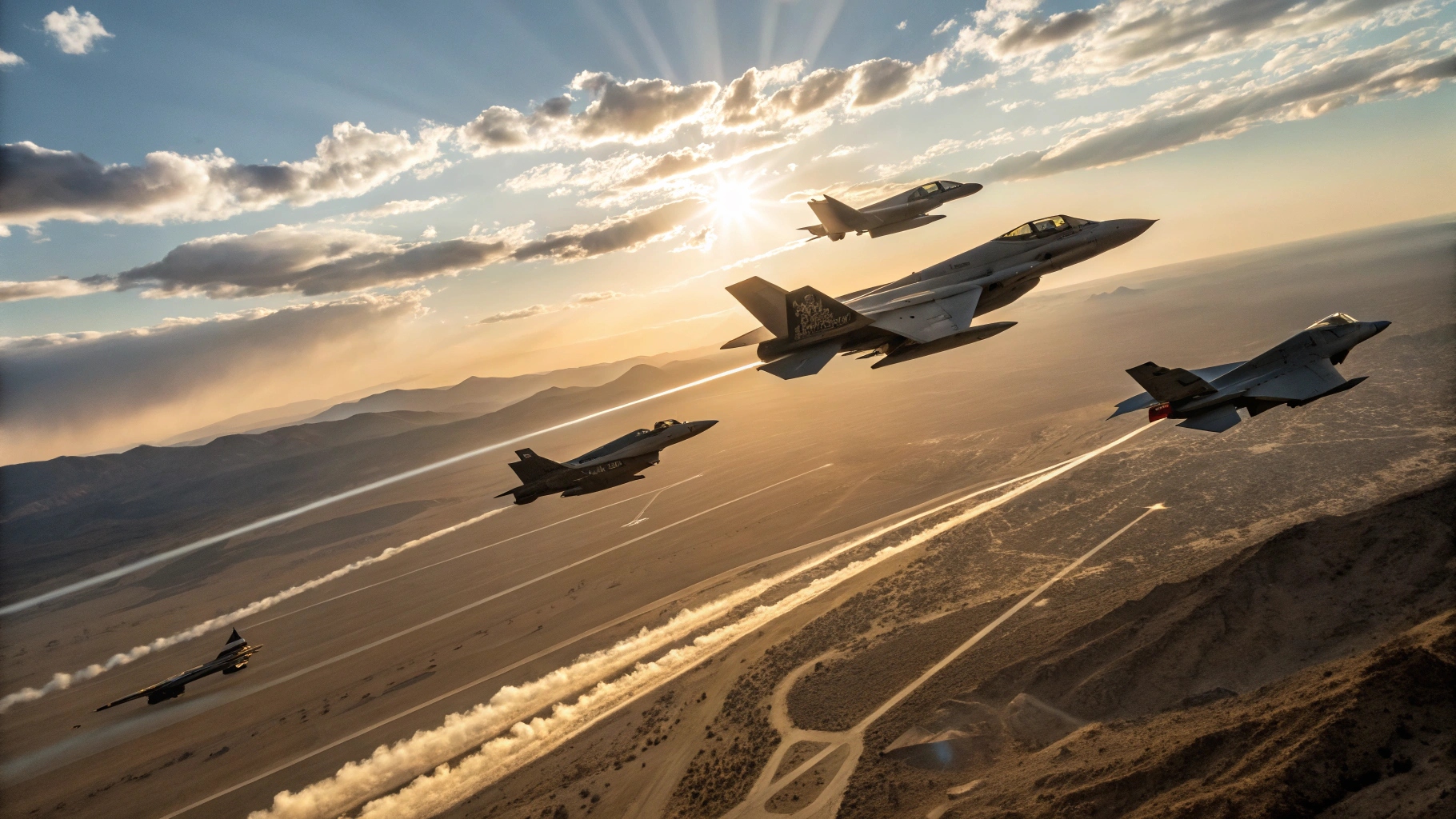
US-based Stavatti Aerospace has entered the competitive landscape of the US Navy’s Next Carrier Air Dominance (NCAD) initiative with the reveal of its SM-39 Razor fighter concept. The aircraft is proposed as a long-term successor to the F/A-18 Super Hornet, offering an unconventional design approach focused on speed, adaptability, and next-generation combat capabilities.
Central to the SM-39’s design is a stealth-oriented triple-fuselage layout, engineered to minimize aerodynamic wave drag during high-Mach flight. The company claims the aircraft can achieve speeds of up to Mach 4, while maintaining supercruise capability above Mach 2.5, enabling rapid penetration and response across contested maritime theaters.
The aircraft is being developed with future weapons integration in mind, including compatibility with directed-energy systems such as high-power lasers. Stavatti plans to market the SM-39 in manned, optionally manned, and fully autonomous configurations, supported by a modular cockpit design. Its avionics core, located in the central fuselage, incorporates a Raytheon-supplied AESA radar, along with internal weapon bays optimized for reduced radar signature.
Propulsion is provided by a dual-engine arrangement, blending General Electric technology with Stavatti’s proprietary NeoThrust E1400 engines. The concept announcement aligns with recently disclosed NCAD planning details, which envision a minimum acquisition of 600 aircraft at an estimated unit cost of $85 million. Deliveries are expected between 2031 and 2037, supported by a network of training simulators. Looking ahead, Stavatti has proposed establishing a dedicated US manufacturing facility capable of producing up to 200 aircraft per year, supporting approximately 1,600 long-term aerospace jobs.


