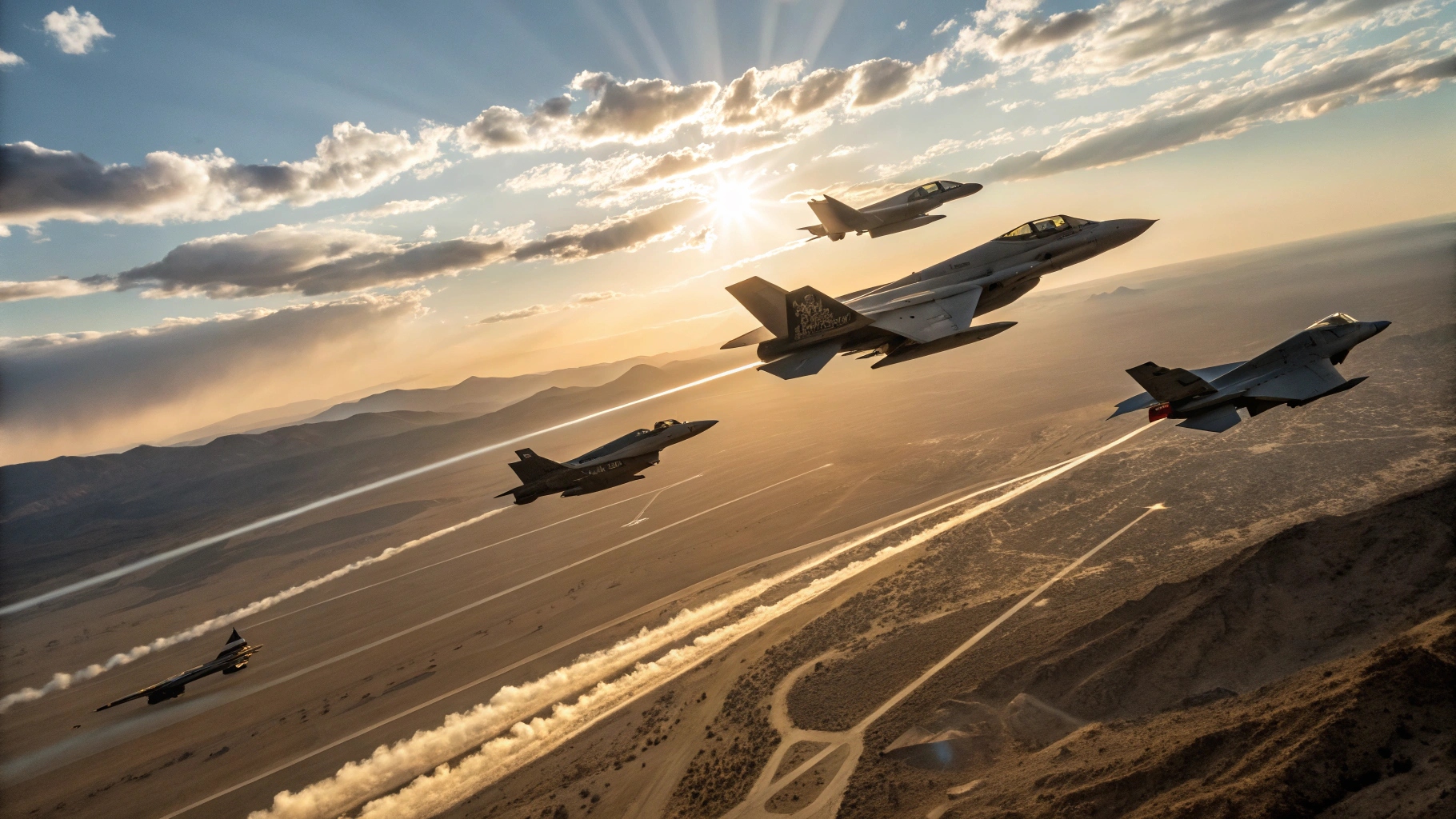

India’s Air Force has urged the country’s premier defense research body, DRDO, to accelerate its efforts in producing extended-range missile systems. The demand emerged after Operation Sindoor in June, where IAF fighters conducted deep strikes up to 200 kilometers inside Pakistani territory. The campaign showcased India’s use of weapons such as the BrahMos cruise missile, French SCALP, and Israeli Rampage and Crystal Maze systems.
Roughly three months after the confrontation, the IAF renewed its call for missiles with ranges beyond 200 kilometers. The service highlighted its priority for the extended-range Astra missile, an indigenous air-to-air weapon. The Astra Mark-1 has been in service since 2019 with a 110-kilometer reach, while the Mark-2 variant, which can extend to 160 kilometers, is undergoing testing. Additionally, India is exploring the acquisition of Russia’s long-range R-37 missile to bridge current capability gaps.
The air force has also requested quicker development of Project Kusha, a long-range missile defense program led by DRDO. Parallel to these efforts, India is considering adding two more Russian S-400 squadrons to its arsenal, supplementing the five already procured. These steps are aimed at countering regional threats and ensuring better preparedness in future conflicts.
Concerns about the May air battle with Pakistan have further fueled the urgency. Reports indicate that the IAF suffered losses after underestimating the actual range of the Chinese-origin PL-15 missile, which exceeded 200 kilometers. This miscalculation allowed Pakistani fighters to operate with an advantage, reinforcing India’s need for longer-range missile systems and advanced defensive capabilities.