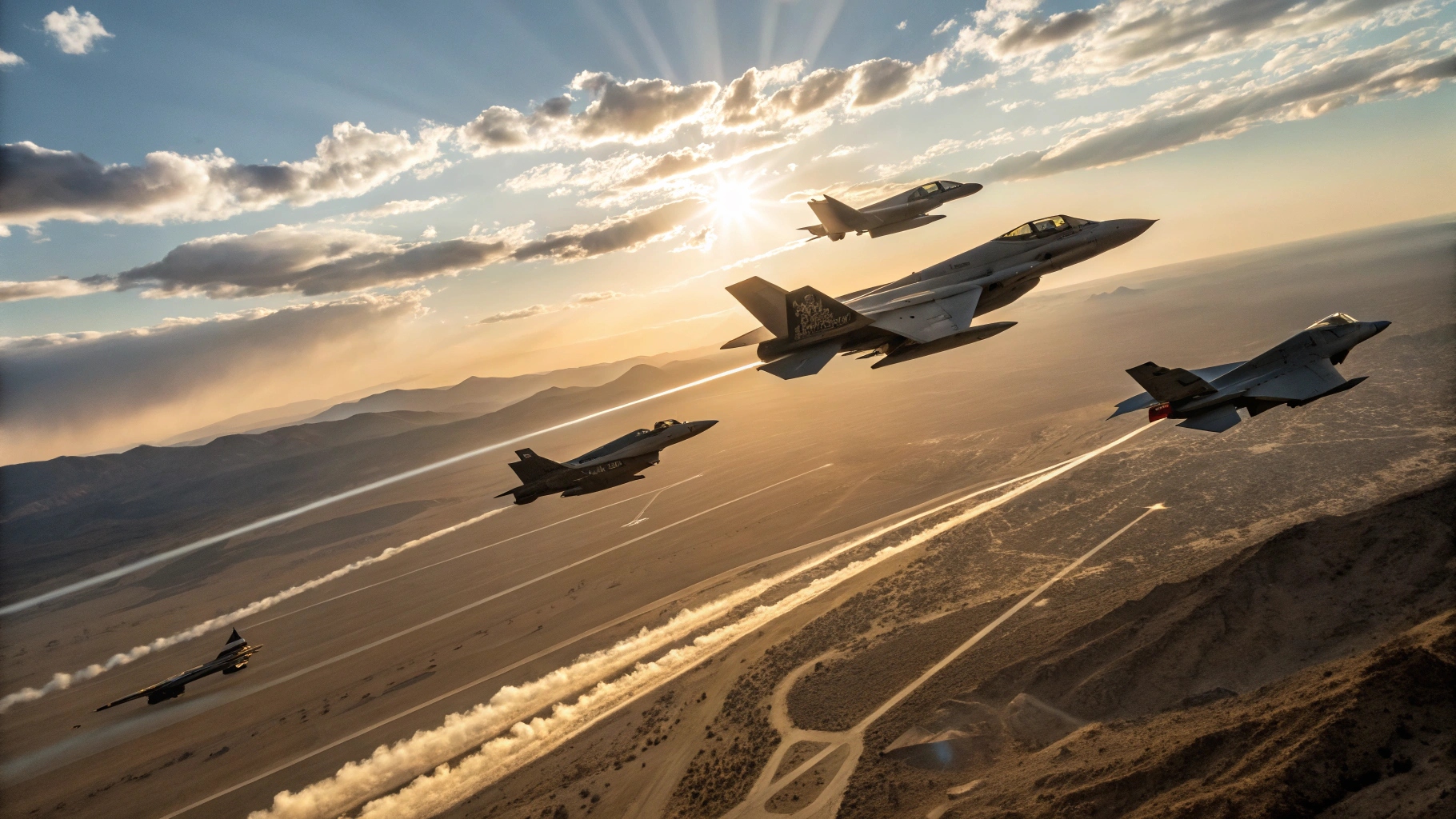

At the 2025 Changchun Air Show, China’s People’s Liberation Army Air Force made headlines by placing its J-20 stealth fighter on public static display for the first time. Until now, the fifth-generation aircraft had only appeared in flyover demonstrations. The exhibition also marked the production of the 300th J-20, a milestone that highlights Beijing’s rapid progress in fielding large numbers of its flagship stealth jet. Defense observers believe the decision reflects a higher degree of operational confidence and reinforces China’s ambitions to reshape the regional balance of airpower.
Earlier in September 2025, the PLAAF’s J-20 drew further attention when the PLA Military Updates X account released images of the aircraft carrying an unusually large weapons payload. The configuration showed 12 PL-15 long-range air-to-air missiles and two PL-10 short-range missiles, a loadout often described as the aircraft’s “beast mode.” While eight PL-15s were attached externally, the remainder, including two PL-10s, were housed internally. This reduced the jet’s low-observable features, but when combined with support from KJ-500 airborne early warning aircraft, the J-20 could employ the “A guide B shoot” tactic, using external sensors to direct its missile firepower.
The PL-15 missile itself is regarded as a central element of the PLAAF’s evolving air combat strategy. Designed by the China Airborne Missile Academy, it is an active radar-guided missile with a dual-pulse motor, capable of reaching speeds beyond Mach 5. Its effective engagement range is believed to extend between 200 and 300 kilometers, placing it among the world’s most formidable long-range air-to-air weapons. A downgraded version, the PL-15E, was developed for export customers, offering a shorter 145-kilometer range.
This export model played a key role in the India–Pakistan conflict in May 2025, where the Pakistan Air Force employed both the PL-15 and PL-15E in combat for the first time. Pakistani J-10C fighters reportedly downed several Indian aircraft, including a Rafale, using the missiles. The recovery of PL-15E debris within Indian territory later confirmed their operational use and provided valuable material for outside experts to analyze the system’s real-world performance.