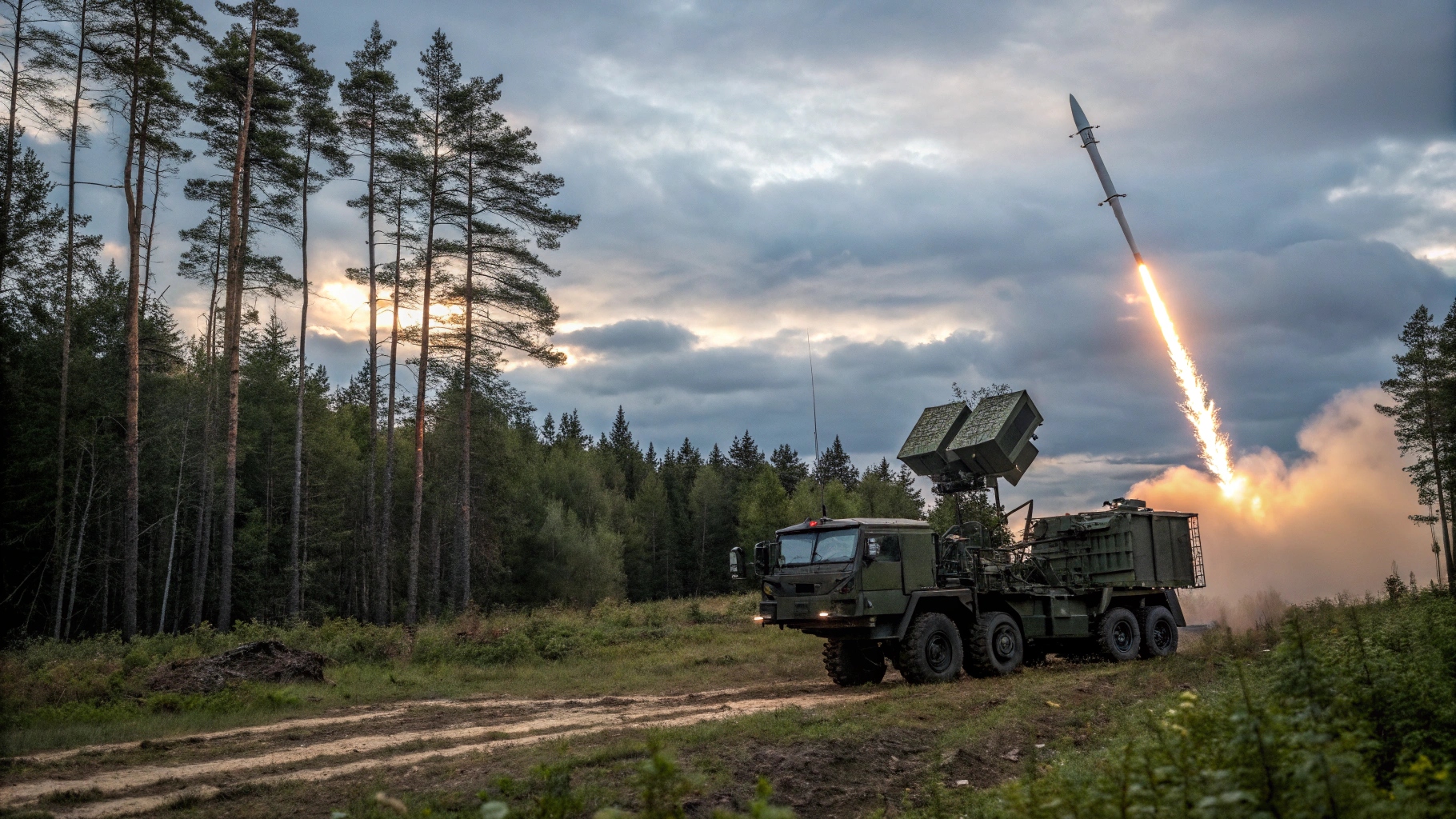
Turkey has moved forward with major investments in its national air defense capability, signing $6.5 billion in new contracts to enhance its AI-enabled “Steel Dome” air defense system, local media reported. First revealed in 2024, the Steel Dome project is intended to protect Turkey against drones, missiles, and aircraft at multiple threat ranges. Modeled conceptually after Israel’s Iron Dome, the system combines 47 core subsystems, including radar arrays, missile launchers, command-and-control centers, and short- to long-range interceptors.
Officials have consistently highlighted that Steel Dome technologies will be fully domestically developed, marking another milestone in Turkey’s drive toward military independence. The system’s rapid development comes at a time of increasing regional instability, with ongoing conflicts in Gaza, Syria, Lebanon, Iran, and the prolonged Ukraine-Russia war underscoring Turkey’s need for an advanced, layered defense shield. Turkish leadership has repeatedly described the project as strategically vital to national security.
Earlier this year, Turkey procured over $460 million in supporting systems to strengthen the program’s foundation. These included Hisar O 100 and Siper air defense systems, Alp-series radar platforms, Puhu and Redet electronic warfare systems, and Korkut self-propelled air defense vehicles. These assets serve as building blocks for the Steel Dome’s multi-tiered structure, designed to intercept everything from low-flying drones to high-altitude missile threats.
The Steel Dome initiative is part of a broader transformation in Turkey’s defense sector. Through sustained investments, Ankara has reduced its dependence on foreign suppliers from 80 percent two decades ago to less than 20 percent today. Meanwhile, Turkey’s export-driven defense industry continues to surge, led by its internationally recognized drone programs. Defense exports reached $7.15 billion in 2024, compared to $5.5 billion in 2023, with government forecasts expecting more than $8 billion in exports for 2025.