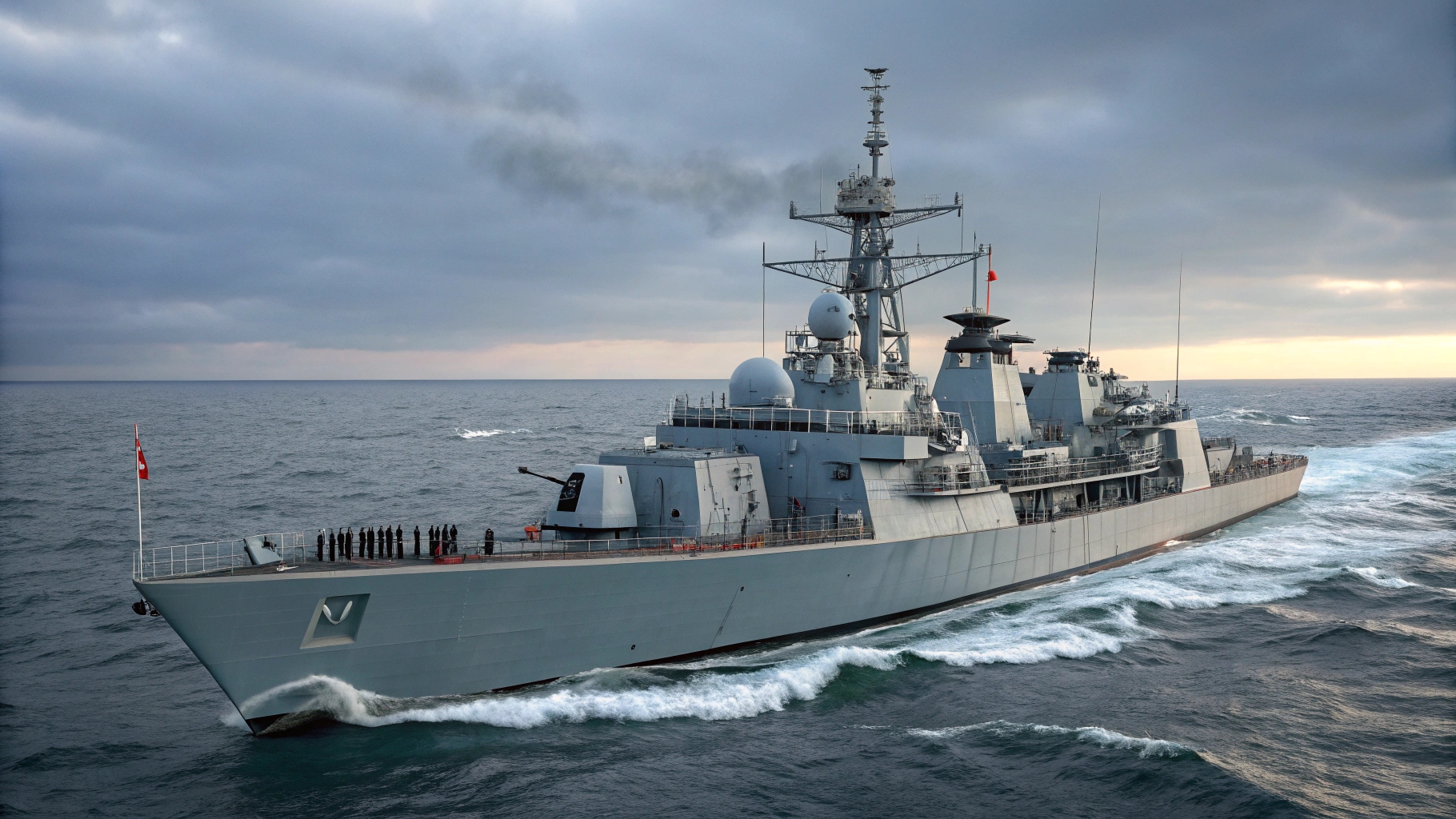

The Belgian Navy has welcomed its first City-class minehunter, the Oostende (M940), at the Zeebrugge Naval Base in Bruges, marking a key milestone in Belgium’s rMCM modernization program with the Netherlands. The new ship will play a vital role in replacing older fleets and strengthening joint European maritime defense operations.
Developed under the 2019 Belgian-Dutch Replacement Mine Countermeasure (rMCM) initiative, the program will deliver 12 next-generation vessels—six for each country—by the 2030s. Managed by Belgium Naval & Robotics, a collaboration between Naval Group and Exail, the effort combines advanced shipbuilding with cutting-edge unmanned systems to reshape mine warfare capabilities.
The City-class adopts a stand-off mine countermeasure design, enabling detection and neutralization of sea mines from safe distances. It leverages unmanned surface, aerial, and underwater vehicles to conduct remote operations, thereby reducing risks for sailors and improving mission efficiency. These autonomous systems can operate in concert, ensuring continuous mine-clearing and surveillance in contested waters.
The Oostende replaces the aging Tripartite- and Alkmaar-class minehunters that have served Belgium and the Netherlands since the 1980s. At 82 meters long, it can carry over 60 crew members, reach speeds of 15 knots, and travel 3,500 nautical miles without refueling. Its onboard systems include multi-domain drones, cranes, inflatable boats, and acoustic and destruction modules to perform complex counter-mine operations. The vessel also features naval guns, heavy and general-purpose machine guns, water cannons, and long-range sound defense systems, ensuring robust protection in high-threat maritime zones.