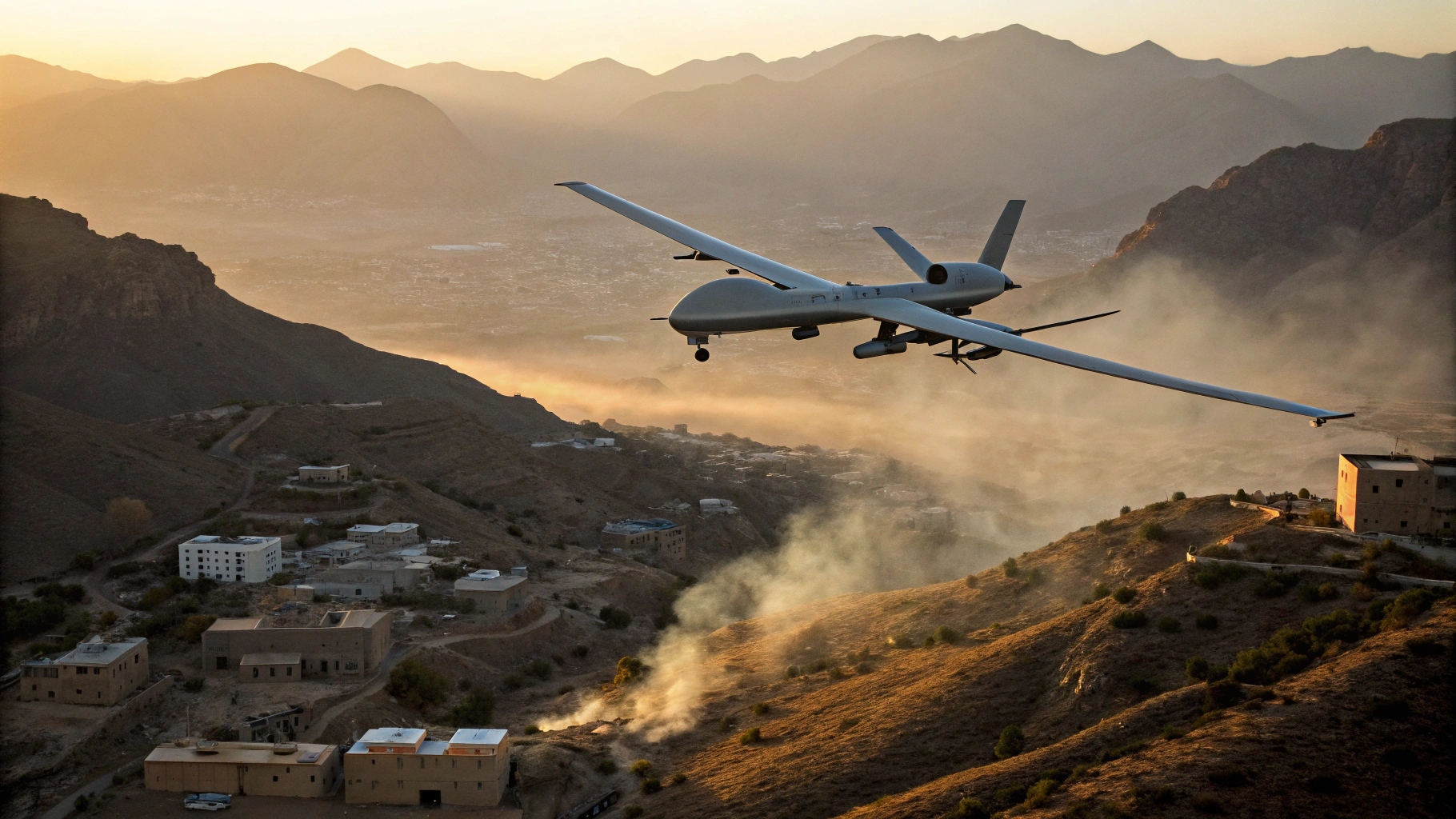

The U.S. Air Force has expanded its unmanned aerial operations in the Caribbean with the confirmed deployment of a seventh MQ-9A Reaper drone from Aguadilla, Puerto Rico, according to newly surfaced imagery. The move highlights the growing role of remotely piloted aircraft in tracking transnational criminal networks and supporting U.S.-led counter-narcotics operations across the region.
Operating from Rafael Hernández Airport, the MQ-9A Reapers provide persistent surveillance over key maritime routes used for drug smuggling from South America toward North America. The former military airfield has become a critical launch point for ISR missions, offering rapid access to the southern Caribbean and nearby chokepoints linked to Venezuelan maritime traffic. U.S. officials view the location as ideal for sustained drone operations without the logistical burden of deploying larger manned aircraft.
The newly deployed Reaper integrates into a broader network of unmanned systems supporting Joint Interagency Task Force South, which coordinates air, naval, and law enforcement assets in the fight against illicit trafficking. Observers have reported an uptick in Reaper flight patterns over the Mona Passage and Caribbean Sea, signaling intensified monitoring of high-risk maritime zones. Defense analysts say the MQ-9A’s endurance and sensor suite provide coverage that would otherwise require multiple crewed sorties.
Configured for maritime surveillance, the MQ-9A drones carry advanced sensors capable of identifying low-profile and fast-moving vessels, including narco-submarines. Defense sources note that expanding Reaper operations from Puerto Rico enables the U.S. military to optimize resource allocation, freeing up P-8 Poseidon and Coast Guard platforms for wider-area patrols while maintaining continuous ISR presence in the Caribbean.