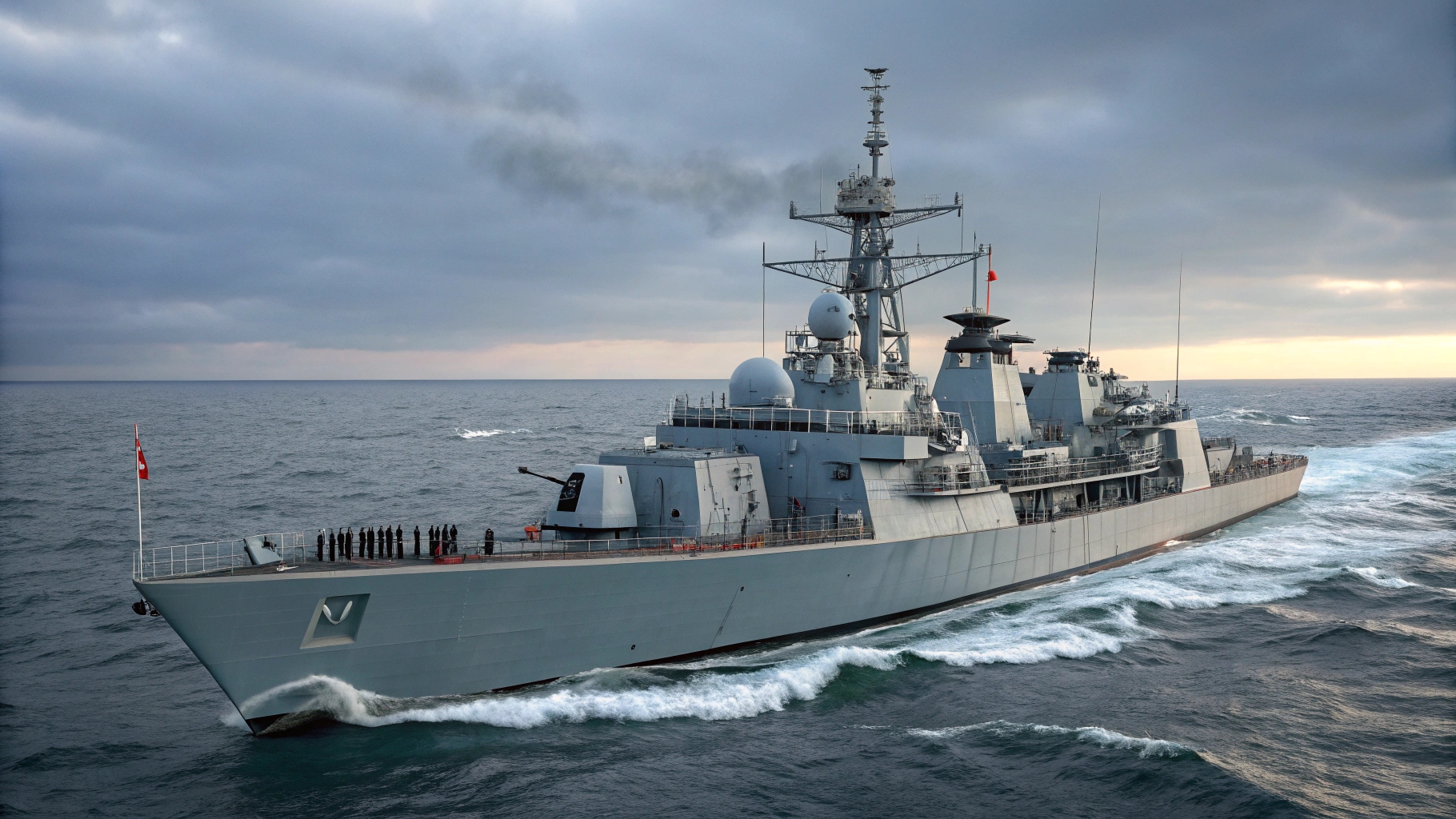

The British Royal Navy plans to equip Type 45 destroyers with the new DragonFire combat laser system by 2027, becoming Europe’s first navy to field a deployed ship-based high-energy laser. London views the initiative as a milestone in surface-fleet modernization and a major adaptation to rising drone threats, especially in contested maritime regions. Officials say the weapon offers a dramatic reduction in engagement costs compared to traditional missile interceptors.
Defense sources indicate that DragonFire trials demonstrated the weapon’s ability to track and destroy small airborne targets with high precision. As integration advances, engineers are completing upgrades to power-supply and thermal-cooling systems—both prerequisites for sustained laser operation at sea. Royal Navy leaders call the system an essential response to inexpensive unmanned platforms that are increasingly fielded by state militaries and irregular forces.
Designed through an industrial partnership between MBDA UK, QinetiQ and Leonardo, DragonFire is intended to counter drones, loitering munitions, fast surface craft and, potentially, incoming missiles. The system is expected to provide a layered defense option during saturation attacks, where low-cost threats can overwhelm conventional interceptors. By using directed-energy instead of missile stocks, the Royal Navy aims to develop a more affordable defensive architecture for future operations.
DragonFire’s 50-kilowatt-class infrared laser employs advanced beam-combination technology to merge multiple fiber-laser modules into a single coherent output, producing exceptional power density. This enables precise energy delivery against airborne targets at long range, reducing reliance on kinetic interceptors and supporting a new generation of laser-based naval air-defense systems within NATO.