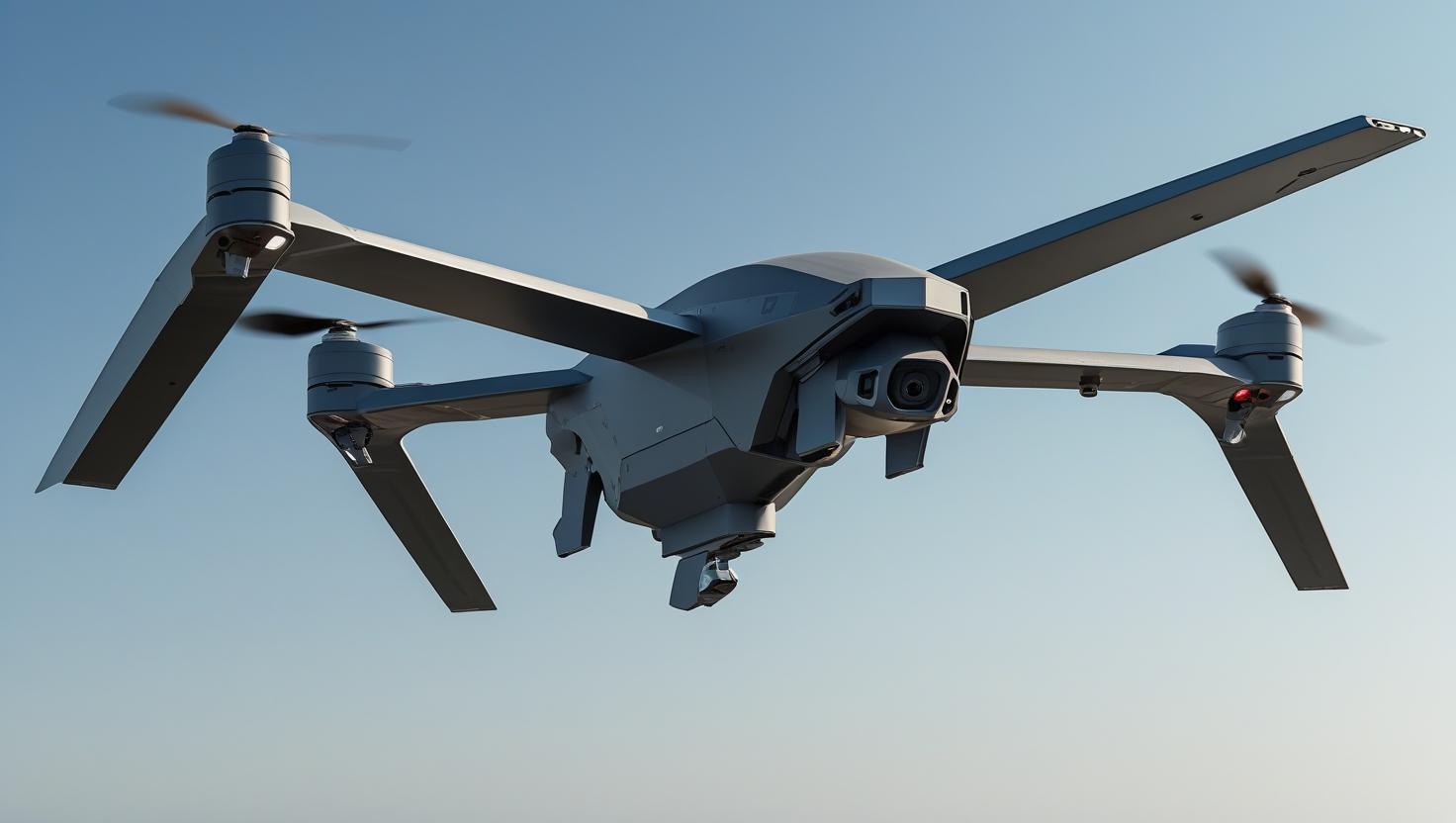
Boeing has disclosed its design for an autonomous tiltrotor drone, marking a major step in the company’s vision to expand collaborative unmanned operations within the US military. The prototype, titled the Collaborative Combat Rotorcraft (CxR), has been developed to act as a multi-mission wingman, capable of executing logistics, strike, and reconnaissance missions alongside manned aircraft.
The CxR platform merges the vertical agility of a helicopter with the speed of a fixed-wing aircraft, enabling it to perform diverse roles in dynamic combat environments. Boeing envisions the drone taking part in maritime strike missions, battlefield resupply, and armed surveillance operations, supporting a range of US service branches, including the Army, Navy, and Air Force.
Designed for high-speed performance, the CxR can reach up to 250 knots (288 miles or 463 kilometers per hour) and transport payloads as heavy as 2,000 pounds (907 kilograms). Its tiltrotor configuration ensures rapid launch and recovery from confined areas, giving commanders more operational flexibility in forward or maritime deployments.
Boeing’s CxR concept aligns with the US Department of Defense’s modernization drive toward autonomous air systems capable of operating alongside piloted assets. The aircraft could eventually integrate into programs such as Future Vertical Lift (FVL) and Collaborative Combat Aircraft (CCA), advancing the military’s goal of creating intelligent, networked air fleets that combine speed, endurance, and autonomy for next-generation warfare.