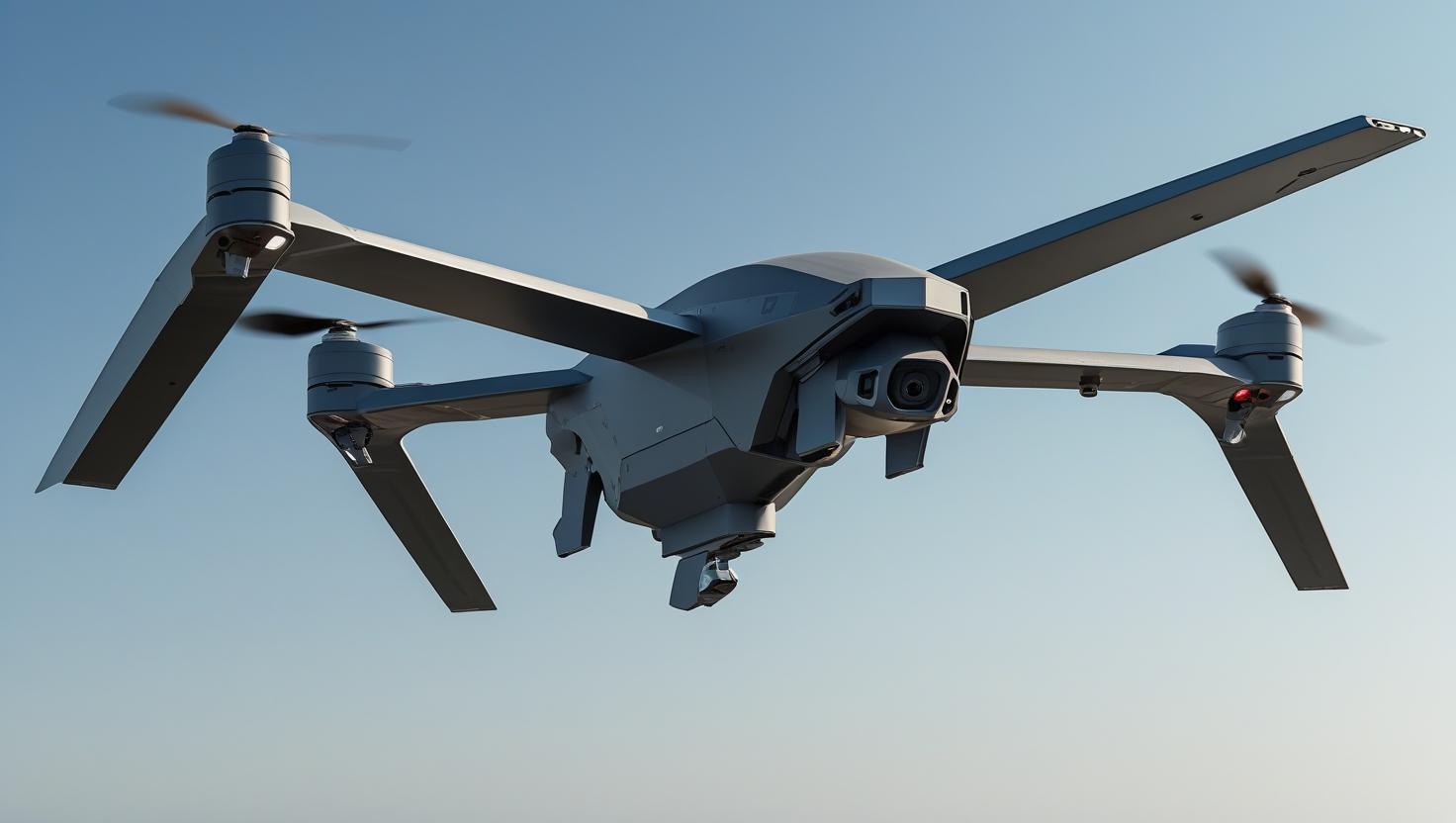
Technology firm Lantronix has launched an AI-powered Drone Reference Platform designed to streamline the development of next-generation unmanned aerial systems for military, security, and commercial use. The solution is intended to help developers rapidly transition from design concepts to functional drone prototypes in just a few weeks.
Built in compliance with US security requirements, the platform consolidates processing hardware, sensors, and flight control into a single integrated architecture. This approach removes the complexity associated with piecing together separate subsystems, making it easier for engineers to focus on mission-specific capabilities rather than basic system integration.
The reference platform is optimized for autonomous drone operations, enabling onboard AI to process sensor data and make real-time decisions during flight. It supports a wide range of applications, including aerial surveillance, perimeter security, industrial inspection, and infrastructure monitoring, where fast and intelligent responses are critical.
Powering the system is the Open-Q 8550 µSOM, which uses Qualcomm’s Dragonwing QCS8550 processor to deliver up to 50 TOPS of AI performance. The compute capability supports demanding workloads across drones, robotics, smart cameras, and other edge devices, while the Linux-based software stack allows rapid customization and deployment.
The platform offers built-in support for FLIR Hadron 640 thermal cameras and accommodates additional optical and infrared payloads. Flight operations are managed through the Pixhawk PX4 autopilot, providing flexibility across different mission profiles and operating environments.
By expanding into the drone sector, Lantronix is diversifying beyond its established IoT hardware business and positioning itself as a key player in the rapidly growing UAS market. The Drone Reference Platform is being demonstrated at CES in Las Vegas, as the global drone industry moves toward an estimated $57.8 billion valuation by 2030.