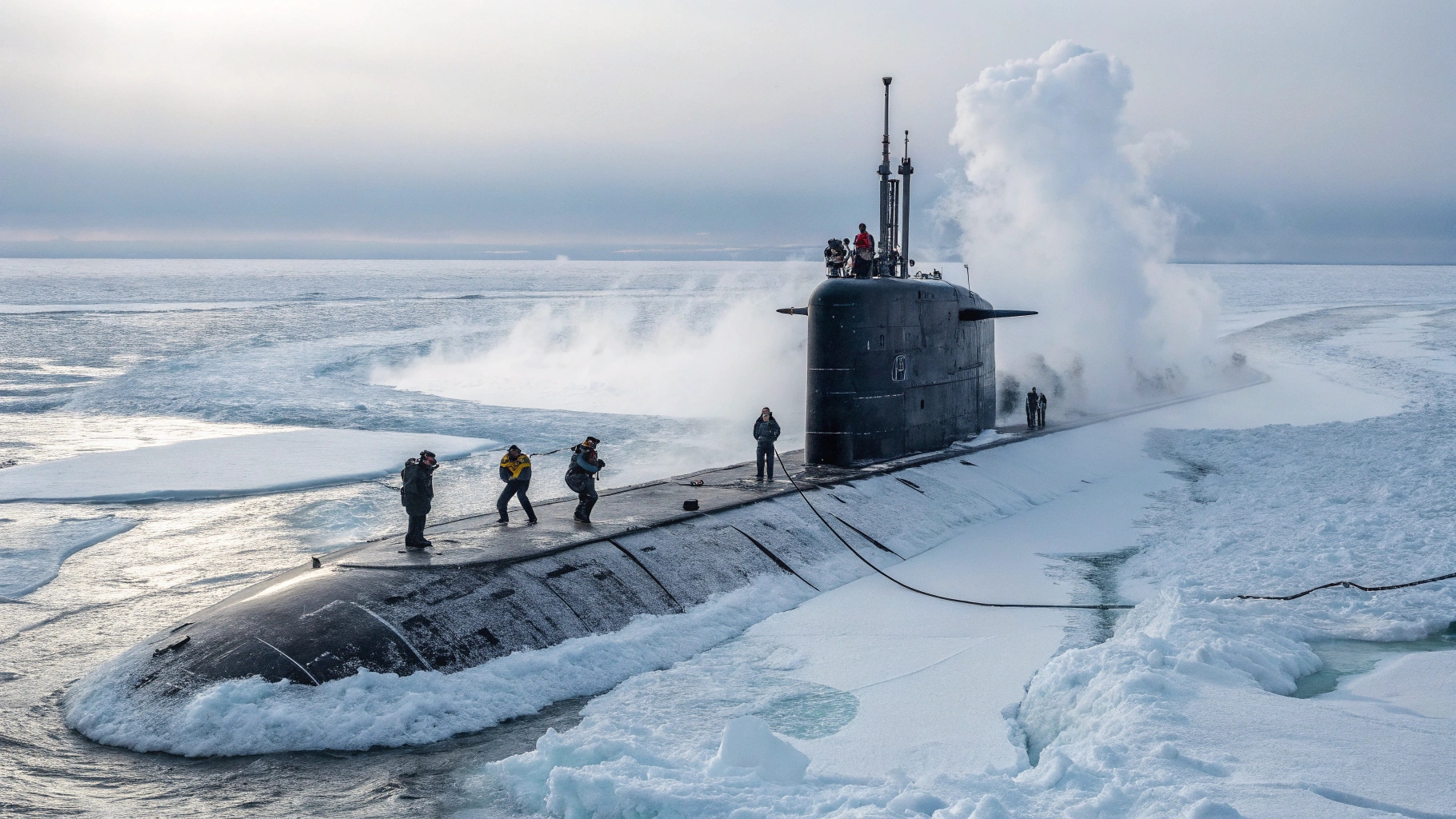
Deep below the surface, beyond observation and reach, the United States is building the next foundation of its nuclear deterrent. The Columbia-class submarine is a new-generation strategic platform designed to replace the Ohio-class fleet and carry the sea-based nuclear mission into the mid-21st century.
Built for extreme stealth, endurance, and survivability, the class integrates cutting-edge propulsion, sonar, and missile systems, allowing it to operate undetected for extended deployments while maintaining a constant deterrent presence across the world’s oceans.
A New Generation of Strategic Submarines
The US Navy’s submarine force consists of SSNs (attack submarines), SSGNs (cruise missile submarines), and SSBNs (ballistic missile submarines). Unlike the multi-role SSNs and SSGNs, SSBNs exist for a single purpose: strategic nuclear deterrence.
As the Navy’s highest-priority modernization effort, the Columbia-class program will deliver 12 ballistic missile submarines to replace the Ohio-class fleet, which is expected to retire during the 2030s.
Costs, Schedule, and Program Risks
The scale of the Columbia-class makes it one of the most expensive defense programs in US history, with procurement costs estimated at $126.4 billion and total acquisition costs reaching $139.7 billion. The first boat, USS Columbia (SSBN-826), entered construction in 2021 and is planned for delivery in the early 2030s.
Subsequent submarines will be produced at roughly two-year intervals to ensure uninterrupted nuclear deterrence as older platforms are phased out. Despite its strategic importance, the program must overcome technical complexity, stringent stealth demands, and budgetary pressures.
Design and Operational Concept
The Columbia-class is engineered to prioritize stealth over speed. Noise and vibration are minimized through advanced hull design, acoustic treatments, machinery isolation, and modern propulsor technology. Its electric-drive system further reduces mechanical signatures and complexity, helping the submarine merge into the ocean’s ambient sound environment.
A life-of-ship reactor removes the need for refueling over its 42-year service life, increasing availability and lowering long-term maintenance demands. Secure, low-probability-of-intercept communications— including extremely low-frequency systems—allow the submarine to receive authenticated orders while submerged, even in contested communications environments.
Armed with Trident II D5 ballistic missiles, the Columbia-class is designed to function as a survivable second-strike force, ensuring credibility, stability, and deterrence rather than offensive first-use capability.
Strategic Future
By combining advanced propulsion, stealth engineering, and modular construction, the Columbia-class sets a new benchmark for ballistic missile submarine design. Defense analysts consistently describe continuous at-sea deterrence as a pillar of US nuclear strategy, and the Columbia-class will anchor that mission for decades—ensuring that US retaliatory capability remains credible under any conditions.