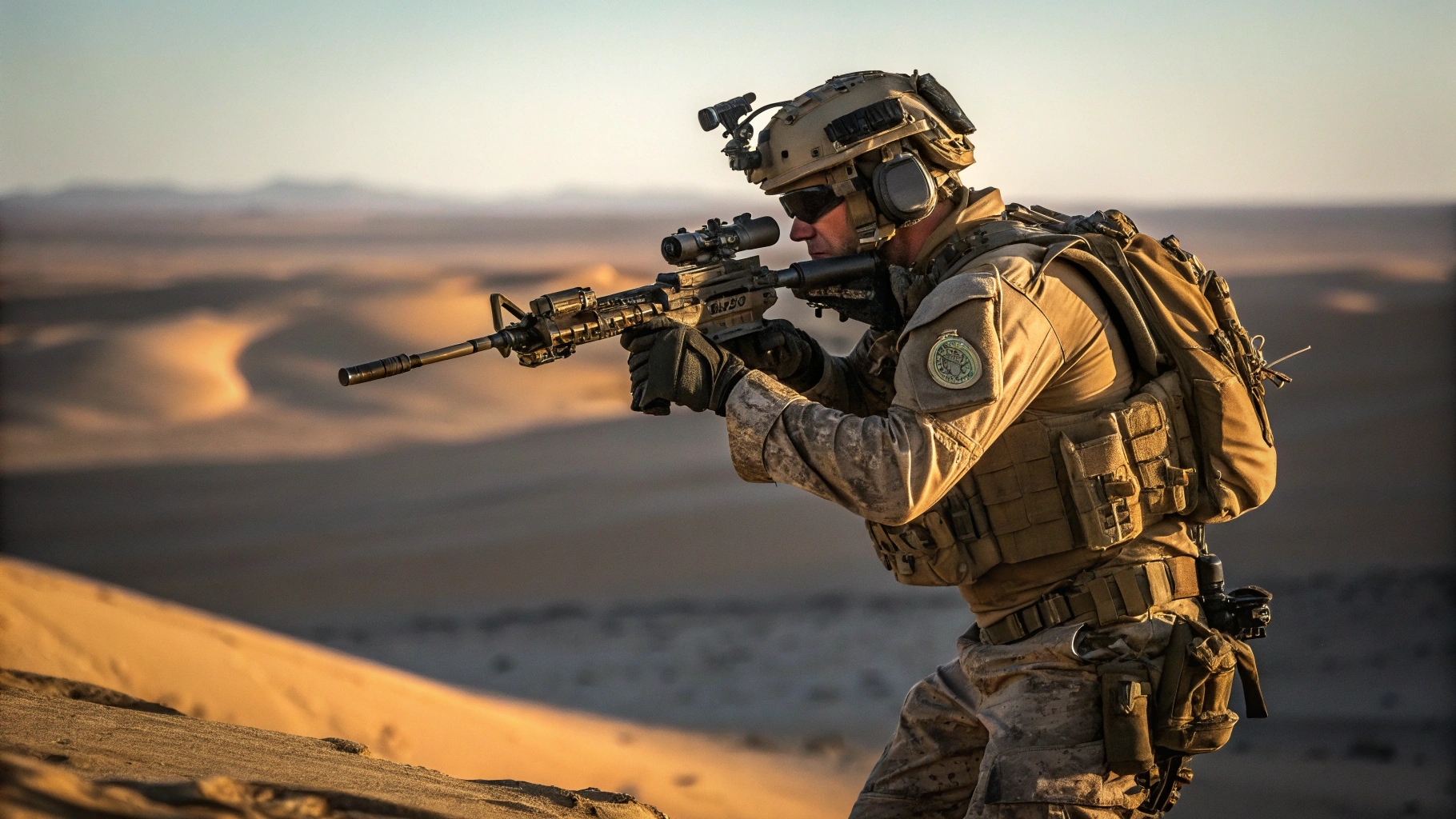

The US Army is conducting field evaluations of augmented reality systems and anti-drone weapons while supporting Customs and Border Protection along the US-Mexico border. The effort, rooted in policies initiated under the Trump administration, enables troops to deliver real-time intelligence to border authorities while assessing new military technologies in rugged and unpredictable conditions.
At the center of testing are the IVAS 1.2 augmented reality goggles and DZYNE’s Dronebuster C-UAS rifle. The IVAS headsets, developed with Microsoft, Anduril, and Meta, combine AR displays, low-light sensors, and mapping tools to enhance soldier awareness and coordination. The improved version addresses earlier concerns over discomfort and performance. Meanwhile, the Dronebuster offers a compact, battery-free solution to jam drones within a 2-kilometer range.
Soldiers are also deploying complementary systems such as Anduril’s Black Hornet 4 microdrones for close surveillance and Palantir’s Tactical Intelligence Targeting Access Node, a vehicle-mounted system that scans radio frequencies to detect UAS threats. Enhanced remotely operated weapons and long-range radios further expand their ability to provide immediate alerts to border patrol agents.
Col. Hugh Jones, commander of the 2nd Stryker Brigade Combat Team, said his forces are responsible for monitoring over 1,000 miles of border. Each soldier is positioned to cover roughly half a mile of challenging terrain, including mountains, deserts, and wetlands that are inaccessible to vehicles, giving the Army a unique opportunity to evaluate technology in real-world missions.